On June 28, 1776, South Carolina Patriots successfully defended Sullivan’s Island against a British naval assault. The fort used native palmetto logs to absorb cannon fire. Unlike traditional hardwoods, the spongy palmetto wood swallowed iron balls instead of shattering, allowing the garrison to withstand the bombardment and repel the fleet.
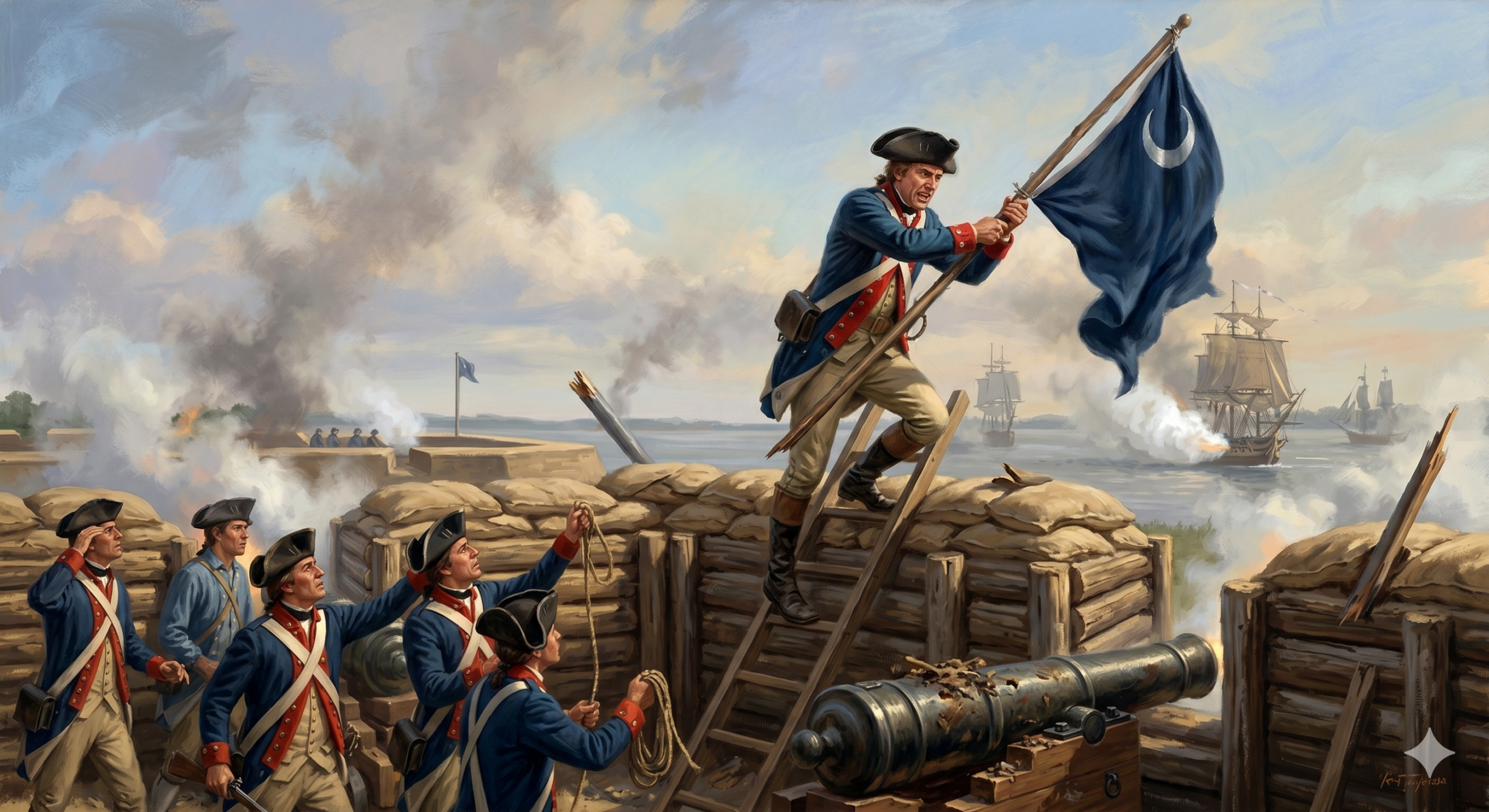
During the battle, Sergeant William Jasper risked his life to retrieve the fallen flag, signaling continued resistance to the British fleet. This victory forced the British to withdraw and established the palmetto tree as a symbol of American resilience. The event remains a significant moment in the Revolutionary War.
This post is part of an ongoing series, America 250.
The ultimate showdown between 18th-century military muscle and raw, accidental engineering took place on June 28, 1776, right here in South Carolina. Six days before the Declaration of Independence was signed in Philadelphia, a massive British fleet packed with over 200 heavy cannons dropped anchor off Charlestown Harbor. Standing in their way was an unfinished, rectangular dirt fort on Sullivan’s Island, manned by Colonel William Moultrie and a few hundred second-line Patriots.
The British expected a swift, brutal slaughter. They didn’t get one, all because of a humble, local tree: the Sabal Palmetto.
The Spongy Shield
Standard military strategy dictated building fortifications out of dense, rigid hardwoods like live oak. When a heavy iron cannonball hits oak, the wood splinters violently, sending lethal shards flying inward like shrapnel. But Moultrie’s men didn’t have time for oak. They built their fort’s double-layered walls out of native palmetto logs, packing the 16-foot gap between them with dense, wet beach sand.
When the British flagships unleashed their first massive broadside, something extraordinary happened. The palmetto wood was incredibly soft, fibrous, and spongy. Instead of shattering or fracturing, the logs simply flexed. They swallowed the kinetic energy of the incoming 32-pound iron balls, burying them deep inside the spongy fibers or spitting them harmlessly out into the sand.
British gunners watched in sheer disbelief as their devastating artillery fire was literally absorbed by the walls. The fort was quite literally swallowing their attack whole, allowing the Patriots to conserve their scarce gunpowder and fire back with devastating precision.
Jasper’s Defiance
As the grueling ten-hour bombardment wore on, a British shot snapped the fort’s flagship staff, sending Colonel Moultrie’s blue “Liberty” banner tumbling outside the walls onto the open beach. To the fleet outside, a fallen flag meant surrender. To the men inside, it was a crushing blow to morale.
“Colonel, the flag has fallen!”
“Then we must bring it back.”
Sergeant William Jasper didn’t hesitate. Stepping out from the safety of the spongy fort, Jasper leaped through an open embrasure directly into a hail of active British cannon fire. He walked the exposed, exploding beach, retrieved the fallen banner, and climbed back up onto the ramparts.
Lacking a proper staff, he fixed the flag to a simple sponge-staff—the long wooden rod used to clean the cannons between shots. He drove it firmly into the sand, climbed back down, and calmly returned to his gun. That single act of defiance instantly rallied the garrison and signaled to the British that South Carolina had no intention of backing down.
America 250
By sunset, the humiliated British fleet cut their anchors and slipped away. The spongy palmetto had held, and Jasper’s bravery kept the spirit alive.
As we look toward the 250th anniversary of our nation, this story is the perfect example of revolutionary grit. The Patriots won not because they had better gear, but because they expertly adapted to their environment and refused to break under pressure. It’s the reason the palmetto tree proudly anchors the center of the South Carolina state flag today—a permanent monument to the day a spongy tree stumped the world’s greatest navy.