Does Lobbying Explain Why Washington Won’t?
A short briefing on the 2022 pharma-stock study, later substitution research, and what federal lobbying data actually show.
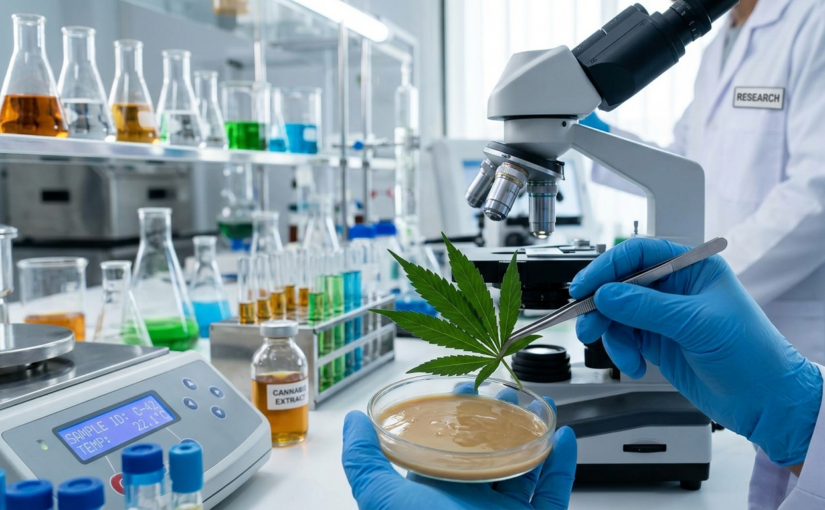
When states legalize marijuana, investors treat it as bad news for conventional drugmakers. That was the core finding of a 2022 PLOS ONE paper by economists at Cal Poly and the University of New Mexico. Using stock returns and sales data for hundreds of pharmaceutical firms from 1996 to 2019, they found returns were about 1.5 to 2 percent lower ten days after a state medical or recreational legalization event. They estimated investors priced in roughly $3 billion in lost annual sales per event and about $9.8 billion in lost market value across listed firms.
The authors were careful about what that meant. The industry was not shrinking. Returns still rose after legalization; they just rose less than markets had expected. Recreational laws produced a larger implied sales hit than medical laws. Generic manufacturers saw a bigger percentage drop; branded firms lost more in dollars because they are larger. Cannabis, they argued, behaves like a generic competitor that can enter many drug classes at once rather than one narrow indication.
What later studies show
Researchers have not published a clean update of that stock-event design using 2020–2025 legalization waves. Newer work still finds substitution, with important limits. A 2025 Health Economics study of commercial insurance claims from 2010 to 2019 found recreational legalization associated with about a 6 percent drop in net prescription-drug claims in small-group plans—$34 to $42 less per enrollee per year. Large-group plans showed no similar drop, possibly because of workplace drug testing. Medical-only laws had little robust effect in those markets. A 2024 JAMA Network Open paper found benzodiazepine fills fell after cannabis access expanded, while some other psychotropic fills rose. Opioid-substitution studies continue to find lower prescribing after legalization or dispensary openings, which is a narrower slice of the original “across many markets at once” claim.
The lobbying theory
That substitution story is why some people argue Washington will not legalize marijuana until drugmakers stop blocking it. The industry has the money. Pharmaceuticals and health products are the top federal lobbying sector: about $387 million in 2024 and a record $457 million in 2025, according to OpenSecrets. PhRMA alone spent $31.7 million in 2024 and $38.2 million in 2025. First-half 2026 already shows about $244 million for the sector. Cumulative spending since 1998 exceeds $6.3 billion.
Capacity and incentive are not the same as a dedicated anti-legalization campaign. Disclosed lobbying issues are dominated by drug pricing, patents, pharmacy-benefit managers, FDA rules, and coverage of blockbuster products such as GLP-1s. Some firms list cannabis or CBD because they sell cannabinoid medicines and want FDA-style regulation, not because they are running a $457 million “keep marijuana illegal” program. Federal legalization also runs into Schedule I law, treaty obligations, DEA culture, banking and tax rules, youth-use politics, law-enforcement groups, and congressional risk aversion.
Pharma lobbying is large enough to matter. It is a plausible contributing reason federal legalization stays stuck. It is not, by itself, a complete explanation for why Congress still will not pass a legalization bill.
Conclusion
Federal marijuana legalization is overdue because the current split-screen system is incoherent, expensive, and stacked against patients and taxpayers. Adults can already buy cannabis in most of the country, yet the plant remains a federal Schedule I drug, which locks operators out of normal banking, slaps them with the 280E tax penalty, blocks most clinical research, and leaves veterans, seniors, and people in pain paying cash for something that studies keep linking to lower use of opioids, sleep meds, and other prescriptions. State-by-state legalization has not produced the collapse prohibitionists predicted; it has produced regulated stores, tax revenue, and a documented competitive squeeze on conventional pharmaceuticals—exactly the kind of price and substitution pressure Washington claims to want in drug markets. Keeping cannabis illegal at the federal level does not protect public health so much as it protects an outdated statute, a patchwork of enforcement, and industries that would rather not compete with a cheap, unpatentable alternative. Reschedule it, tax it, study it, and let adults buy it under the same adult rules we already apply to alcohol.
Notes
Primary sources discussed: Bednarek, Doremus & Stith, PLOS ONE (2022); Cook et al., Health Economics (2025); JAMA Network Open (2024) on mental-health medications; OpenSecrets federal lobbying totals for Pharmaceuticals/Health Products (2024–2026).