The Original “No Kings Day”

The 1776 Declaration of Independence established a new political order by rejecting hereditary monarchy and the divine right of kings. This movement shifted power from the crown to the people, asserting that legitimate authority arises from the consent of the governed rather than royal birthright.

George Washington solidified this democratic experiment by refusing to become a king after the Revolutionary War. As the United States prepares for its 250th anniversary, the nation continues to reflect on its origins as a republic built on self-governance and the transition from subjects to citizens.

Why July 4th, 1776, Was the Ultimate Anti-Monarchy Move

When we think of the Fourth of July, our minds naturally drift to backyard barbecues, spectacular fireworks lighting up the night sky, and family gatherings. But as we approach America’s landmark 250th anniversary, it’s worth stripping away the modern traditions for a moment to look at the raw, radical nature of what actually happened in Philadelphia in the summer of 1776.

At its core, July 4th wasn’t just a declaration of a new country. It was the world’s ultimate “No Kings Day.”
Shattering an Old World Order

To understand just how revolutionary the Declaration of Independence was, you have to look at the world stage in 1776. For centuries, the global status quo was simple: kings, queens, and emperors ruled by divine right. Power flowed from the top down. The average person wasn’t a citizen; they were a subject. Your rights, your property, and your very life were ultimately at the mercy of a crown.

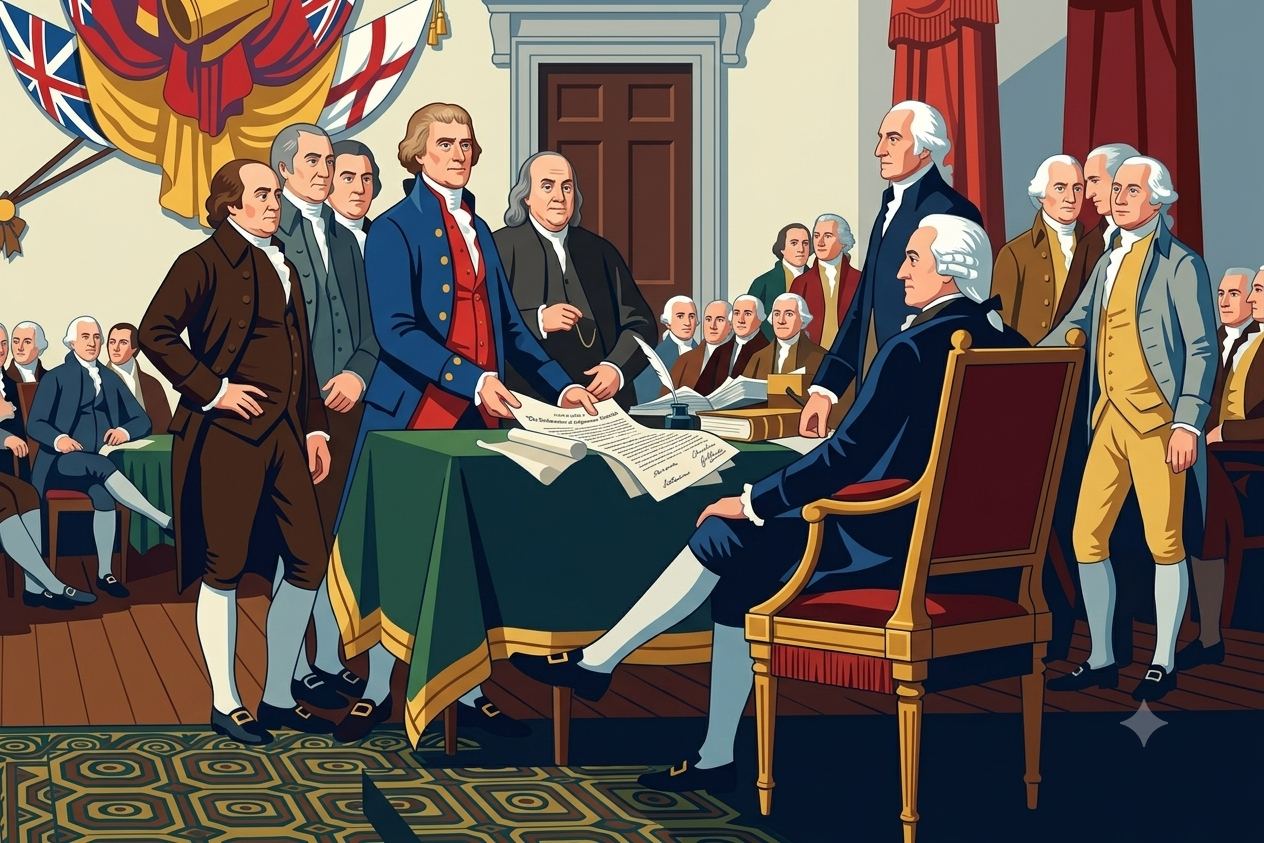
When those 56 delegates gathered at Independence Hall, they didn’t just air a list of grievances against King George III—they fundamentally rejected the entire concept of hereditary monarchy.

“We hold these truths to be self-evident, that all men are created equal…”

With those few words, the Founders pulled the rug out from under the divine right of kings. They boldly argued that legitimate political power doesn’t come from a golden crown; it flows from the consent of the governed.

From Subjects to Citizens

Turning the world upside down didn’t happen overnight, and it certainly wasn’t easy. Choosing to have “No King” meant taking on the most powerful empire and military on the planet. It meant trading the predictable (if oppressive) stability of a monarchy for a messy, dangerous experiment in self-governance.

When the British forces were finally defeated and the constitution was framed, the world expected George Washington to do what any victorious military leader of the era would do: declare himself king. King George III himself famously said that if Washington stepped down and returned to his farm, he would be “the greatest man in the world.”

Washington did exactly that. By refusing a crown, he solidified the promise of 1776. America would have leaders, but it would never have a king.

Carrying the Torch to America 250

As we look toward the Semiquincentennial—America’s 250th birthday—the phrase “No Kings Day” takes on a renewed sense of pride. It serves as a stark reminder of the unique foundation of our republic: a nation built by the people, for the people.

Independence Hall still stands in Philadelphia as a monument to that staggering leap of faith. The Liberty Bell still bears the inscription to “Proclaim Liberty throughout all the land unto all the inhabitants thereof.”

So, this Fourth of July, when you fire up the grill or watch the fireworks burst over your hometown, take a second to remember the radical idea born in Philadelphia 250 years ago. Celebrate the freedom, honor the sacrifice, and raise a glass to the original “No Kings Day.”

What does celebrating America’s 250th anniversary mean to you? Let us know in the comments below!

The Remarkable Story of the Liberty Bell

This is the first post in a series I’m calling “America 250.” I grew up in Pennsylvania and attended Liberty Bell Elementary School, so I chose the Liberty Bell as my subject.

From Practical Tool to Icon of Freedom

The Liberty Bell, one of America’s most cherished symbols of liberty, has a history full of drama, resilience, and a bit of myth.

Originally commissioned in 1751 by the Pennsylvania Provincial Assembly to hang in the steeple of the Pennsylvania State House (today’s Independence Hall), the bell was meant to mark the 50th anniversary of William Penn’s Charter of Privileges. It was first cast in 1752 at London’s Whitechapel Bell Foundry. Upon arrival in Philadelphia, however, it cracked during its very first test ring due to brittle metal.

Local craftsmen John Pass and John Stow stepped in and recast the bell twice. Their successful version was completed in March 1753 and hung in the steeple that June. You can still see their names inscribed on the bell along with the year “MDCCLIII” and the powerful Bible verse from Leviticus 25:10: “Proclaim LIBERTY throughout all the Land unto all the Inhabitants thereof.”

For decades, the bell served a practical purpose: summoning lawmakers to sessions, announcing public events, and marking important news. (Contrary to popular legend, there’s no contemporary evidence it rang on July 4, 1776, though it likely tolled for public announcements around the time of the Declaration of Independence.)

During the Revolutionary War, the bell faced its greatest threat. In September 1777, as British forces advanced on Philadelphia after the Battle of Brandywine, patriots feared the British would seize the bell and melt it down for cannons or ammunition. Along with about ten other large city bells, it was secretly removed under armed guard, hidden among hay and manure on wagons, and transported roughly 50 miles north.

The Liberty Bell was first taken to Bethlehem and then to Allentown (then called Northampton Towne). There, it was carefully hidden under the floorboards of Zion German Reformed Church (now Zion United Church of Christ at 622 Hamilton Street). It remained safely concealed for about nine months until the British evacuated Philadelphia in June 1778, when it was quietly returned.

The bell’s famous large crack developed much later — likely in the early 1840s, from years of heavy use. Attempts to repair it in 1846 (for George Washington’s birthday) only made the damage worse, and it has been silent ever since.

Today, the Liberty Bell stands in Philadelphia as a powerful reminder of America’s founding ideals. Its journey — from a cracked colonial signal bell, through a daring wartime rescue, to a global symbol of freedom — shows the enduring spirit of resilience that helped build our nation.

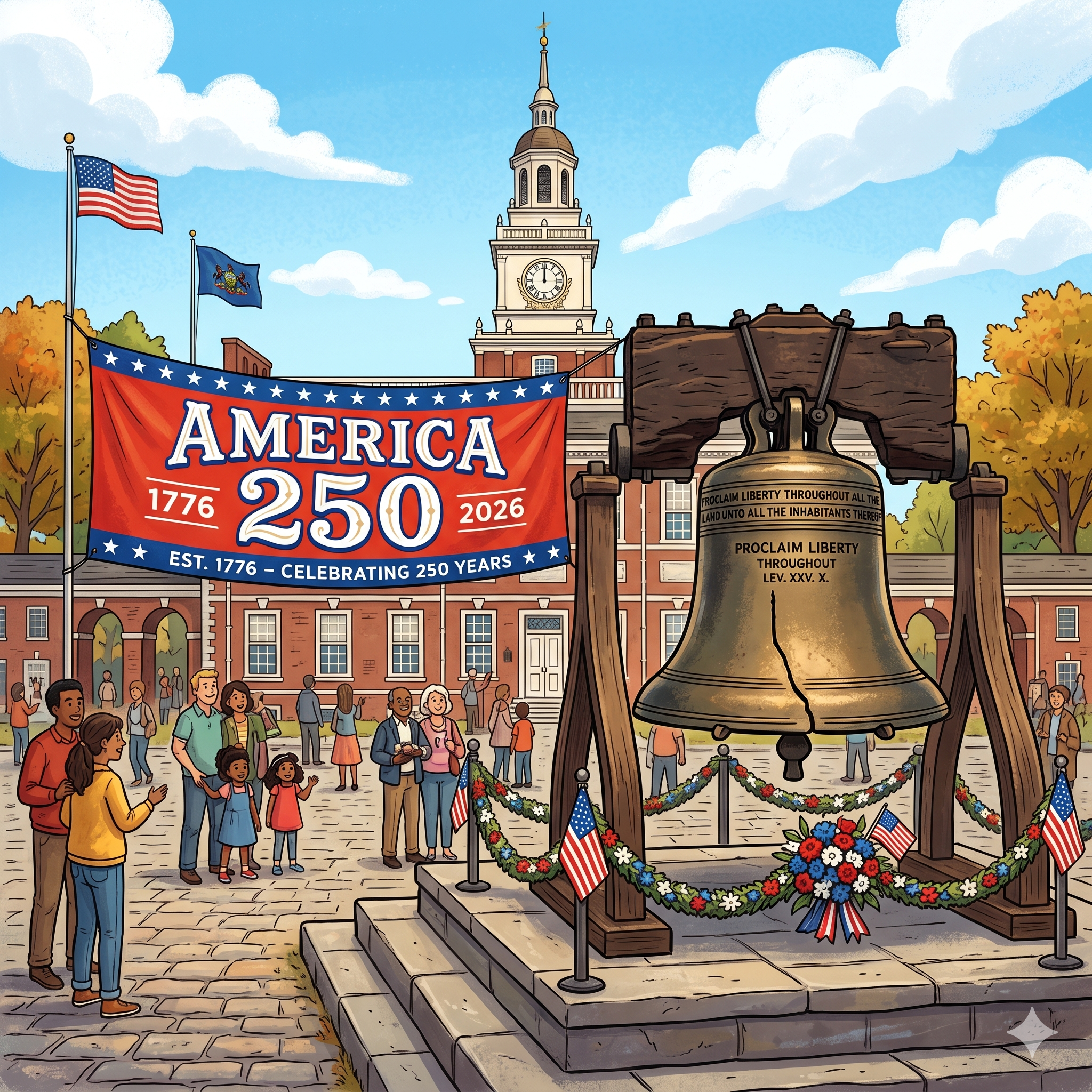
The Liberty Bell stands in front of Independence Hall in Philadelphia. There is a banner that reads "America 250" on the left.

Culinary Crime

Ketchup on a cheesesteak should be a felony. No warnings. Straight to processing.

Painting the Eagle

Here’s how the ground crew paints the Eagle on the middle of the field at The Linc.

The Schuylkill Distressway

When I was growing up, we called it the Schuylkill “Distressway.” Some people call it the “Surekill” Expressway.

Ah yes, the Schuylkill morning commute also known as Philadelphia’s longest running psychological experiment. This morning commute has it all. A 14 minute standstill because someone sneezed in the left lane, a guy eating a hoagie the size of a toddler while doing 75, three separate people trying to merge from a stop like they’re entering the Daytona 500, and that one car that somehow appears in front of you no matter what lane you’re in. You don’t drive 76…you survive it.

Meanwhile in Philly

⚾Unforgettable Moment You Can’t Miss ⚾

I’ve never seen anything like this before.

https://www.tiktok.com/@bleacherreport/video/7518226088040926495

Free Repairs

Mattel has offered to fix the collapsed I-95 bridge in Philadelphia, for FREE!

This is a picture of a Hot Wheels loop de loop track in the middle of a highway.

A spokesman for the company said, “Who says you can’t have fun on the way to work?” 😎 🚙

This Day in History

I grew up 60 miles north of Philadelphia. This story was all over the news for months!

Philly Philly

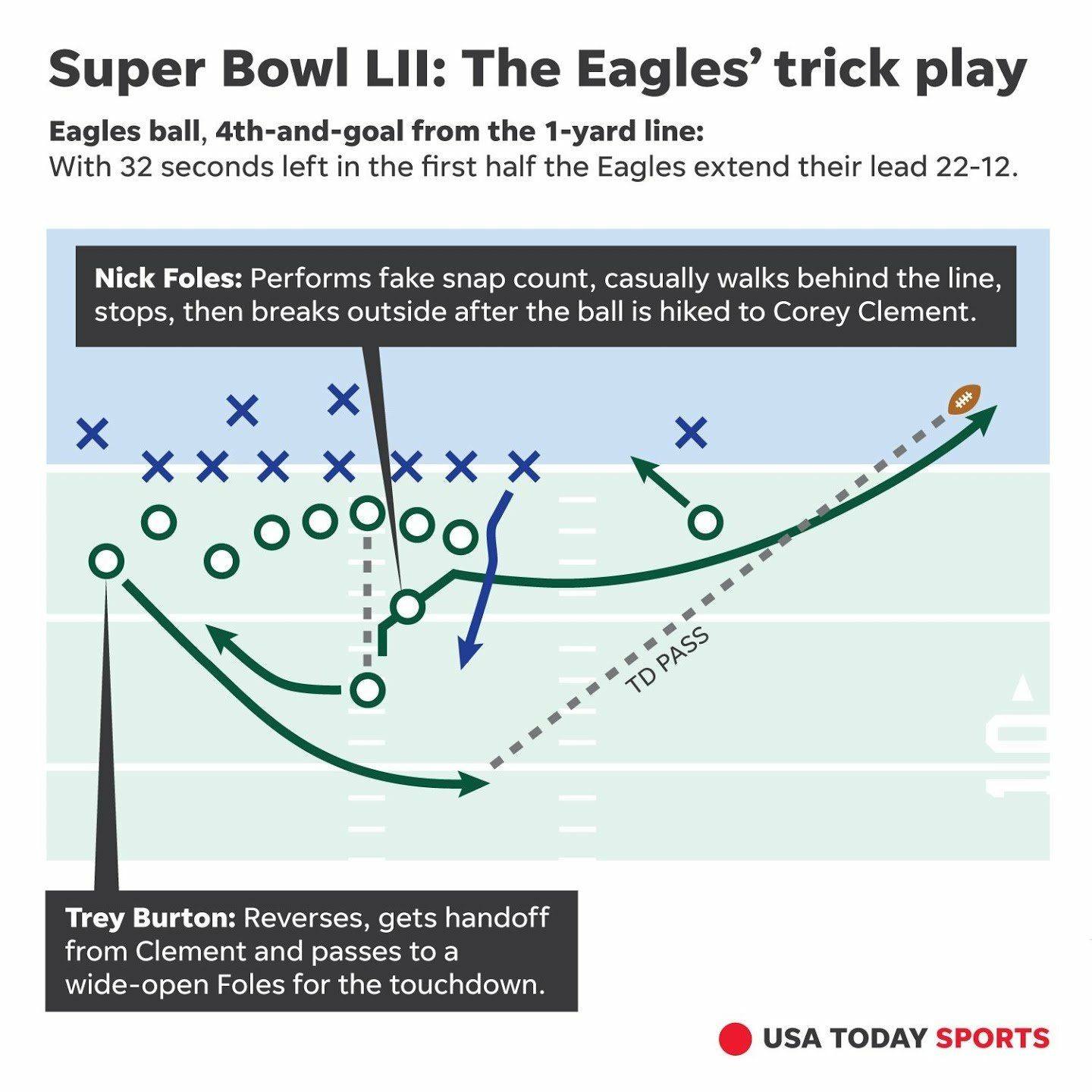
This is the one #SuperBowlLII play that everyone will be talking about for years to come, the Philly Special #WeWonIt #FlyEaglesFly 🏈

Always an Eagle

Eagles to Award Super Bowl Ring to Jon Dorenbos

I did not know Jon Dorenbos had a heart condition. After his appearances on America’s Got Talent he should be able to start a second career as a magician 🎩

from TrommTimes via IFTTT