The Great Seal Debate

When we see the Bald Eagle today, perched regally on the back of a quarter or soaring over a river, it feels like an inevitable choice for a national symbol. It is fierce, majestic, and uniquely North American. However, the path to becoming the face of the United States was a six-year bureaucratic marathon that pitted the “King of Birds” against a surprising contender: the Wild Turkey.

The Six-Year Search

The quest for a national seal began on July 4, 1776, immediately after the Declaration of Independence was signed. It took three separate committees and nearly six years to land on a final design. While early iterations included everything from Lady Liberty to biblical scenes of Moses crossing the Red Sea, the third committee finally leaned into heraldry.

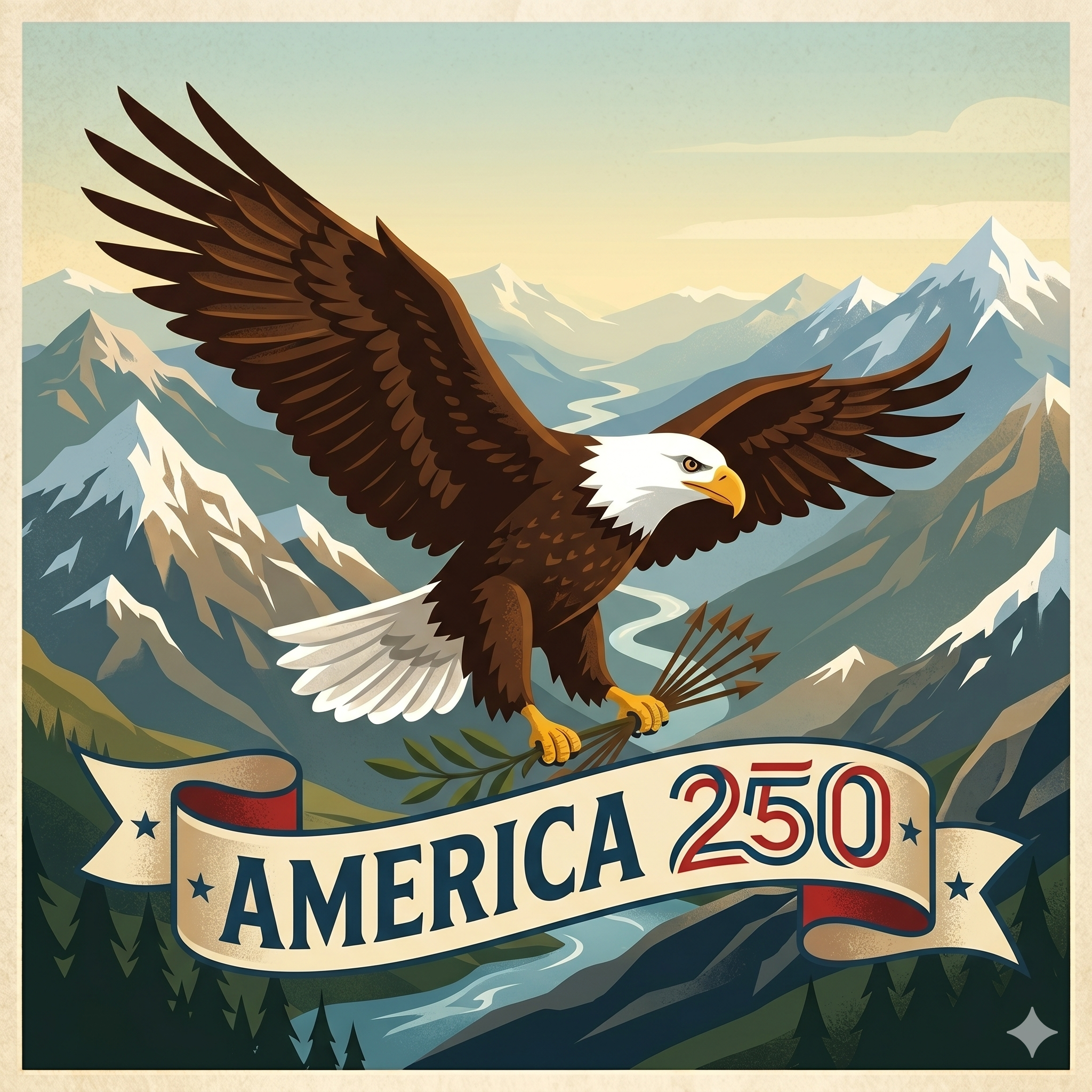
In June 1782, Charles Thomson, the Secretary of the Continental Congress, took the lead. He simplified previous designs, placing the American Bald Eagle at the center. With an olive branch in its right talon and thirteen arrows in its left, the eagle represented a nation that desired peace but was ready for war.

Franklin’s Famous Dissent

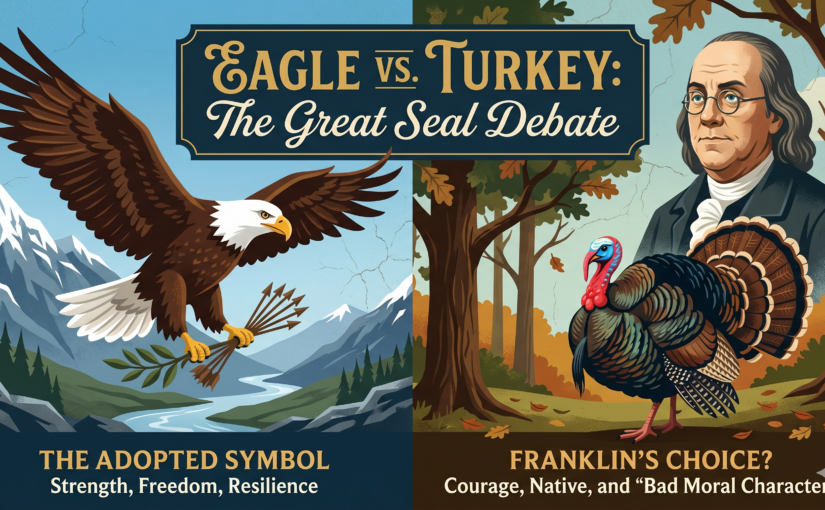
The most colorful objection to this choice came from Benjamin Franklin. Though he was a member of the first committee, his most famous critique wasn’t written in a legislative hall, but in a 1784 letter to his daughter, Sarah Bache.

Franklin was less than impressed with the eagle’s behavior. He wrote:

“For my own part, I wish the Bald Eagle had not been chosen the Representative of our Country. He is a Bird of bad moral Character. He does not get his Living honestly… besides, he is a rank Coward: The little King Bird, not bigger than a Sparrow, attacks him boldly and drives him out of the District.”

To Franklin, the Bald Eagle was a “thief” because it frequently harassed smaller raptors like Ospreys to steal their catch. In contrast, he championed the Wild Turkey. He admitted the turkey was a bit “vain and silly,” but argued it was a bird of courage and a “true original Native of America” that wouldn’t hesitate to protect its territory.
Symbolism vs. Reality

Despite Franklin’s witty observations, Congress stayed the course. They weren’t looking for a bird with the best “work ethic”; they wanted a symbol that projected sovereignty and power to the empires of Europe.

While Franklin viewed the eagle through the lens of a naturalist, the founders viewed it through the lens of history. They were tapping into the tradition of the Roman legions, positioning the young United States as a new kind of republic. Today, the Bald Eagle stands as a testament to that ambition—even if it does occasionally steal a fish or two along the way.
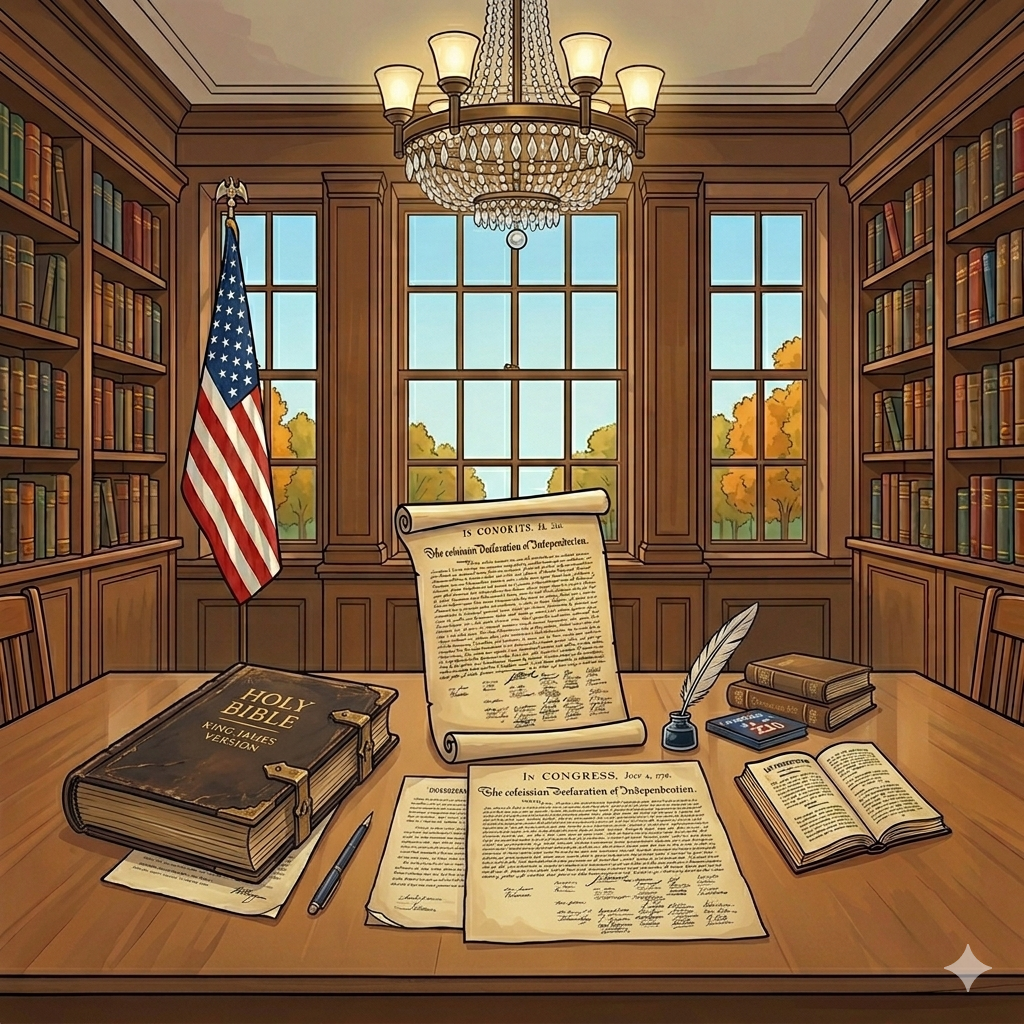
Declaration of Independence

The Declaration of Independence isn’t just a political breakup letter; it’s a masterclass in philosophy deeply rooted in a biblical worldview. 📜✨

While the authors were Enlightenment thinkers, they used the moral vocabulary of the Judeo-Christian tradition to build their case for freedom. Here’s how the Bible influenced the birth of the US:

  • Created Equal: The famous claim that “all men are created equal” rests on the concept of Imago Dei (the Image of God). It was a radical rejection of the “Divine Right of Kings.”
  • Rights from a Higher Power: The Founders argued that rights are “unalienable” because they are endowed by a Creator rather than granted by a government. If the State didn’t give them to you, the State can’t take them away! 🗽
  • The Laws of Nature: Borrowing from the idea of “General Revelation” (think Psalm 19), they believed moral laws were baked into the universe just like gravity. To them, King George wasn’t just being unfair; he was violating the natural order of God.
  • The Final Appeal: Lacking a fair trial in England, the authors appealed to the “Supreme Judge of the world” to oversee their cause, relying on “Divine Providence” to see them through.

Even for the less “orthodox” Founders, the Bible provided the essential framework for a society where human dignity is non-negotiable. 📖

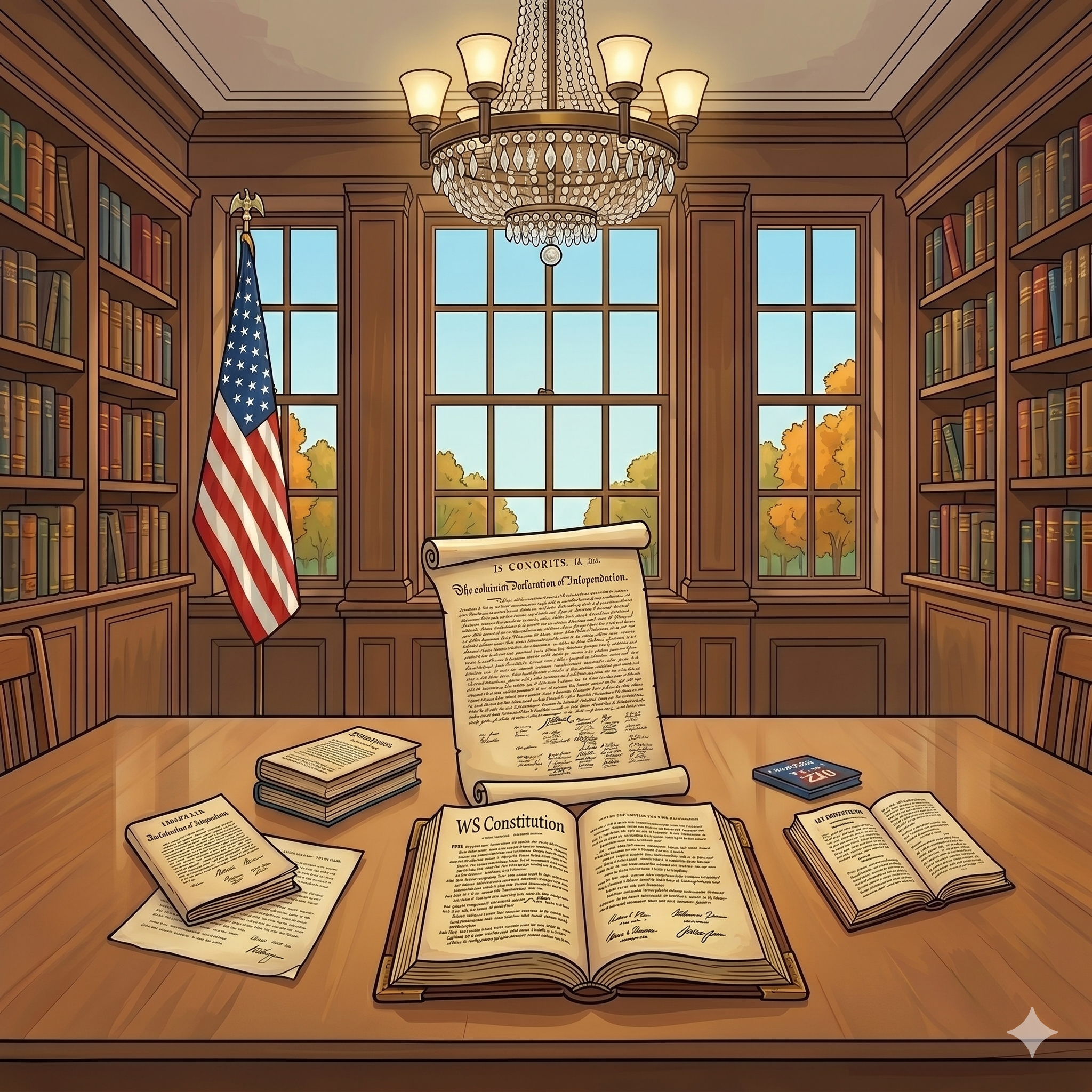
A Bible and the Declaration of Independence sit on a desk in a library.

Why Are We Celebrating America’s 250th Birthday?

It’s a question I hear a lot — and it’s a great one.

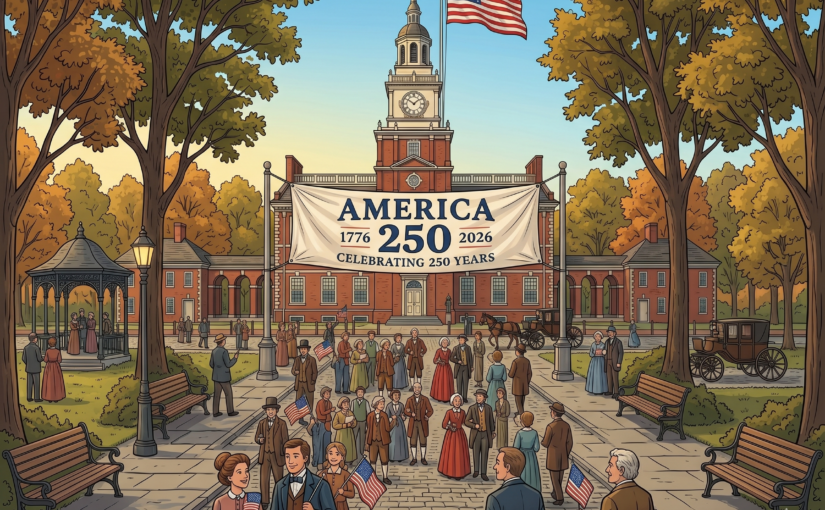
This year, on July 4, 2026, the United States will mark its Semiquincentennial — the 250th anniversary of our country. But if our current form of government, based on the Constitution, is only about 237 years old, what exactly are we celebrating?

The answer lies in two distinct founding moments:

  • 1776: The birth of the nation. On July 4, 1776, the Continental Congress adopted the Declaration of Independence. This bold document declared the 13 colonies free from British rule and announced the birth of a new country grounded in the ideas of liberty, equality, and self-government. That’s when America as a people and a nation came into being. In 2026, we’ll celebrate exactly 250 years since that historic declaration.
  • 1787–1789: The birth of our government. After winning independence, the young nation needed a stronger framework. The Constitutional Convention met in 1787, the Constitution was ratified in 1788, and it officially took effect on March 4, 1789. This created our enduring federal republic with its system of separation of powers, checks and balances, and limited government. As of 2026, that makes our Constitution roughly 237 years old.

Think of it like a person’s life: You celebrate your birthday (the day you were born), not the day you got your driver’s license or graduated from college. The Declaration was our national birthday. The Constitution was the crucial step that turned those newly independent states into a lasting, functional union.

What makes America unique is that we first declared our principles of liberty in 1776, then deliberately designed a government in 1787–89 to protect those principles for generations. Few nations can point to such clear, documented founding moments for both their identity and their system of government.

So as we head into America 250 this summer, the big celebrations are all about 1776 — the birth of the American idea itself. The Constitution’s own 250th milestone will come later, in 2037–2039.

Both dates are worth honoring. One gave us our freedom. The other gave us the enduring framework to keep it.

Happy early birthday, America!

The Remarkable Story of the Liberty Bell

This is the first post in a series I’m calling “America 250.” I grew up in Pennsylvania and attended Liberty Bell Elementary School, so I chose the Liberty Bell as my subject.

From Practical Tool to Icon of Freedom

The Liberty Bell, one of America’s most cherished symbols of liberty, has a history full of drama, resilience, and a bit of myth.

Originally commissioned in 1751 by the Pennsylvania Provincial Assembly to hang in the steeple of the Pennsylvania State House (today’s Independence Hall), the bell was meant to mark the 50th anniversary of William Penn’s Charter of Privileges. It was first cast in 1752 at London’s Whitechapel Bell Foundry. Upon arrival in Philadelphia, however, it cracked during its very first test ring due to brittle metal.

Local craftsmen John Pass and John Stow stepped in and recast the bell twice. Their successful version was completed in March 1753 and hung in the steeple that June. You can still see their names inscribed on the bell along with the year “MDCCLIII” and the powerful Bible verse from Leviticus 25:10: “Proclaim LIBERTY throughout all the Land unto all the Inhabitants thereof.”

For decades, the bell served a practical purpose: summoning lawmakers to sessions, announcing public events, and marking important news. (Contrary to popular legend, there’s no contemporary evidence it rang on July 4, 1776, though it likely tolled for public announcements around the time of the Declaration of Independence.)

During the Revolutionary War, the bell faced its greatest threat. In September 1777, as British forces advanced on Philadelphia after the Battle of Brandywine, patriots feared the British would seize the bell and melt it down for cannons or ammunition. Along with about ten other large city bells, it was secretly removed under armed guard, hidden among hay and manure on wagons, and transported roughly 50 miles north.

The Liberty Bell was first taken to Bethlehem and then to Allentown (then called Northampton Towne). There, it was carefully hidden under the floorboards of Zion German Reformed Church (now Zion United Church of Christ at 622 Hamilton Street). It remained safely concealed for about nine months until the British evacuated Philadelphia in June 1778, when it was quietly returned.

The bell’s famous large crack developed much later — likely in the early 1840s, from years of heavy use. Attempts to repair it in 1846 (for George Washington’s birthday) only made the damage worse, and it has been silent ever since.

Today, the Liberty Bell stands in Philadelphia as a powerful reminder of America’s founding ideals. Its journey — from a cracked colonial signal bell, through a daring wartime rescue, to a global symbol of freedom — shows the enduring spirit of resilience that helped build our nation.

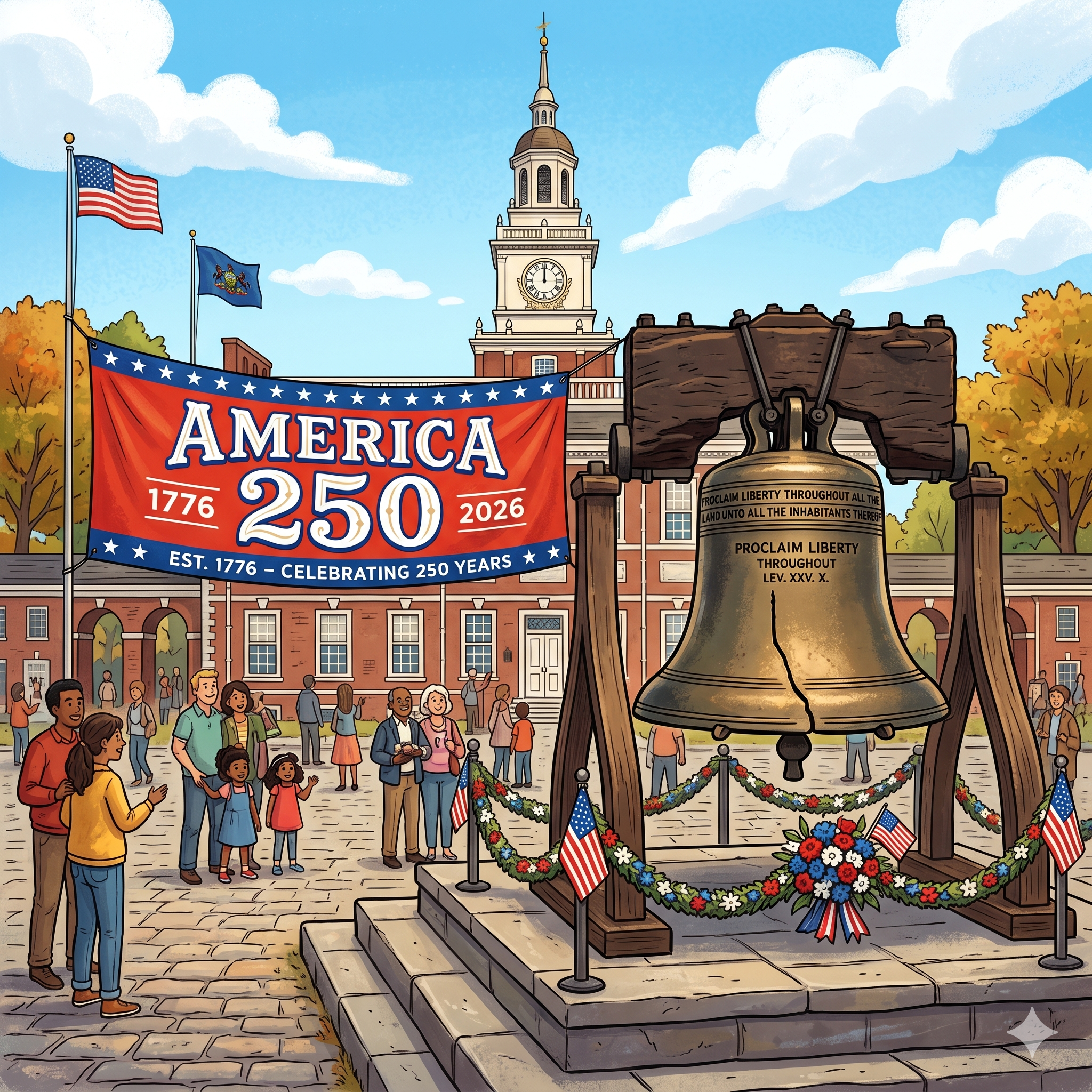
The Liberty Bell stands in front of Independence Hall in Philadelphia. There is a banner that reads "America 250" on the left.

From Church Charity to Corporate Care

The Decline of Protestant Hospitals in the US

There was indeed a time when churches (both Protestant and Catholic) played a huge role in running charity hospitals in the US, especially from the 19th through mid-20th centuries. Many were founded to serve the poor, immigrants, and underserved communities when healthcare was more about basic care and compassion than high-tech medicine. Baptists, Presbyterians, Methodists, and other Protestant groups built their share alongside Catholics. But today, explicitly church-operated hospitals—particularly Protestant ones—are far rarer, and the landscape has shifted dramatically.

Historical Context

Early US hospitals often started as religious charities. Catholic orders (like the Sisters of Charity) were especially active, but Protestants founded many too—Baptists, Presbyterians, Methodists, Episcopalians, and others opened infirmaries and hospitals during the Second Great Awakening and the Industrial Revolution. These were typically nonprofit, donor-supported, and focused on “the here and now” practical help for the sick poor (unlike some Catholic emphases that also tied into preparing souls for the afterlife). By the early 1900s, hundreds existed across denominations.

Why the Big Decline (Especially for Baptists and Presbyterians)?

Several overlapping economic, social, and structural factors explain why we don’t see many standalone Baptist- or Presbyterian-run hospitals anymore (though names like “Baptist Health” or “Presbyterian Hospital” still appear on some buildings):

  1. Professionalization and the shift to business-like operations: Post-WWII (especially 1950s–1980s), medicine became expensive and high-tech. Hospitals needed professional administrators, not just clergy or nuns. Medicare and Medicaid (1965) brought government reimbursement but also strict regulations, reporting requirements, and a push for efficiency. Many church boards transitioned to lay leadership and independent nonprofit status to compete. What started as “compassion-based” became “science-based” then increasingly “profit-oriented” (even in nonprofits).
  2. Consolidation and mergers for survival: Healthcare costs soared, and small independent hospitals struggled. The industry consolidated into large systems. Protestant hospitals often merged with secular ones, sold to for-profits, or spun off as community nonprofits with only historical ties left. This was accelerated in the 1980s–2000s by competition and financial pressures.
  3. Protestant structure vs. Catholic centralization: Catholics maintained (and expanded) their footprint through dedicated religious orders, a hierarchical church structure, and unified ethical guidelines that enabled large national systems (e.g., CommonSpirit, Ascension). Catholic hospitals grew ~28% from 2001–2020 while non-Catholic hospitals declined ~14%. Other religious (mostly Protestant) nonprofits dropped even more sharply—by about 38% in some periods. Protestants are more decentralized (Baptists, especially, emphasize local congregational autonomy; Presbyterians, less so, but still not as centralized). Declining mainline Protestant membership (e.g., PCUSA lost huge numbers) also reduced institutional support.
  4. Government and societal changes: The welfare state (Social Security, Medicare, Medicaid, Hill-Burton Act funding) took over much of the “charity care” role that churches once filled. Tax-exempt status still applies to many faith-linked nonprofits, but they operate more like secular community hospitals to avoid legal issues around church-state separation or to serve broader populations. Secularization in American society also played a role—hospitals prioritized medical professionalism over denominational identity.

But Not Completely Gone

There are still some Baptist and Presbyterian-linked systems:

  • Baptist: Baptist Health (Florida, Kentucky, etc.), Baptist Memorial Health Care (Arkansas, Mississippi, Tennessee), Baptist Health System (San Antonio). These are large nonprofits with historical Baptist roots but largely independent governance today.
  • Presbyterian: NewYork-Presbyterian (a major academic center from a 1998 merger; now more secular in operation), Presbyterian Healthcare Services (New Mexico), and others that retain the name but function as community systems.

Catholic hospitals still make up ~15–20% of US acute-care hospitals (one in six beds), and their systems are among the largest in the country. Protestant ones mostly shed direct denominational control to survive in the modern market.

In short, it’s less about “churches abandoning hospitals” and more about hospitals evolving (or being forced to evolve) into massive, regulated, capital-intensive businesses where the old charity model didn’t scale. The explicit religious branding and governance faded for most Protestants, while Catholics preserved more institutional identity through scale and structure. It’s a classic story of American healthcare’s shift from mission-driven charity to a complex mix of nonprofit, for-profit, and government-influenced care.

What aspect of this interests you most—specific examples of mergers, the Catholic contrast, or how this affects patients today?

Addressing a Grieving Country

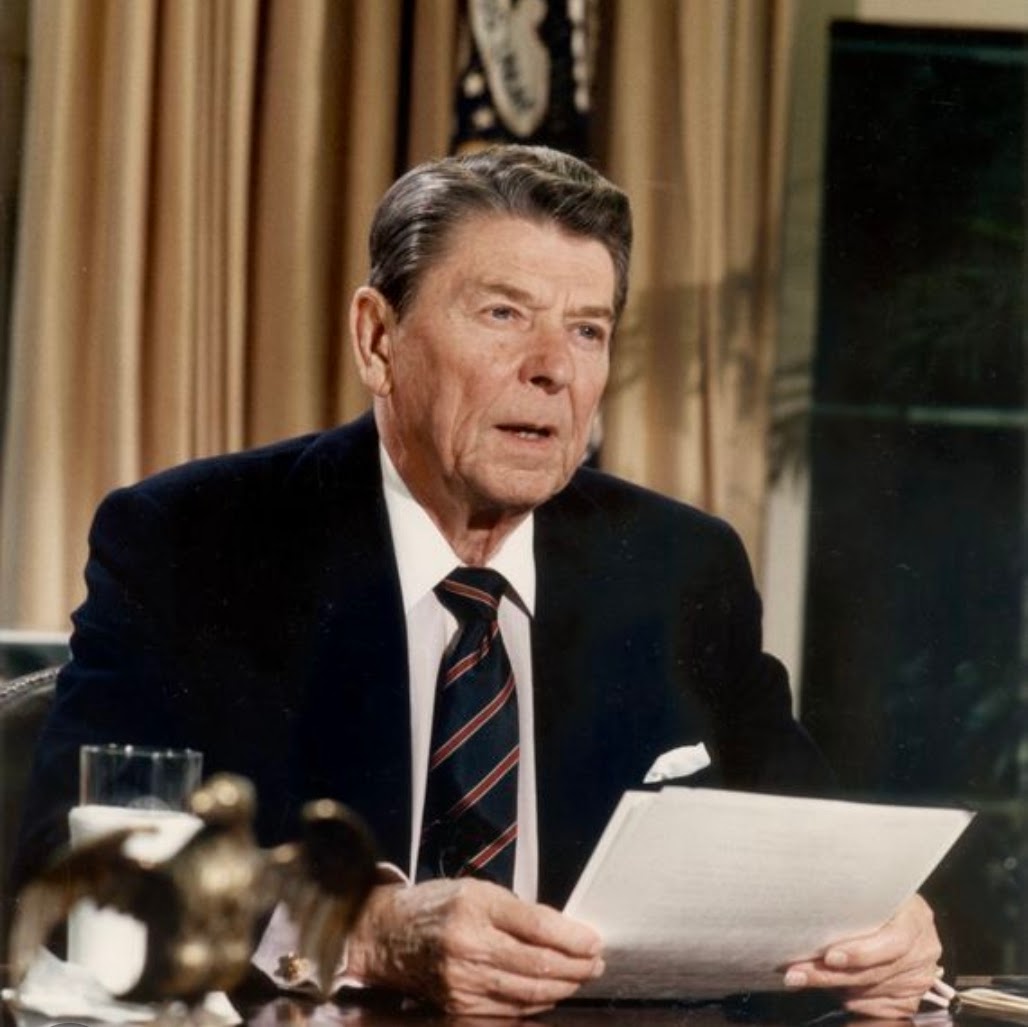
The evening after the Challenger shuttle explosion, Ronald Reagan addressed a grieving nation from the Oval Office. He ended his speech with these words:
“The crew of the space shuttle Challenger honored us by the manner in which they lived their lives. We will never forget them, nor the last time we saw them, this morning, as they prepared for their journey and waved goodbye and ‘slipped the surly bonds of earth’ to ‘touch the face of God.'”

Ronald Reagan sits behind his desk in the Oval Office

Justice or Order?

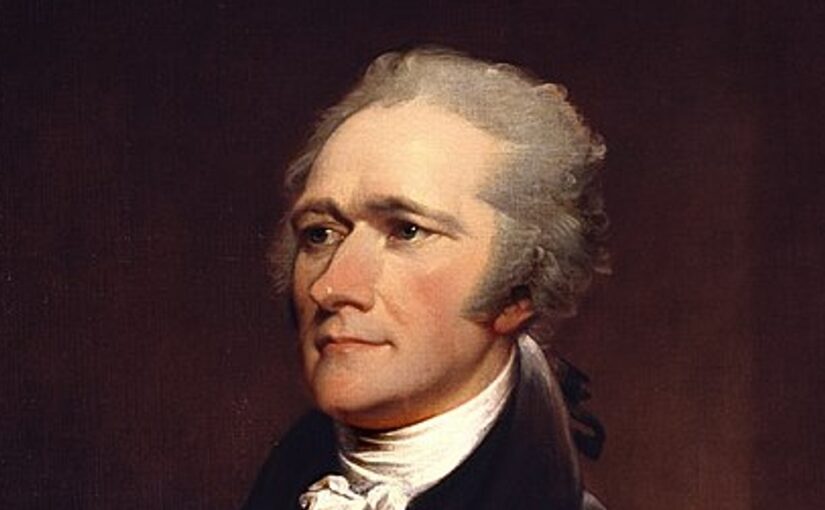
The Real Meaning Behind Hamilton’s Famous Quote

“I think the first duty of society is justice.”

It sounds like a modern plea for equity or fairness. You might expect to see it on a protest sign or in a civil rights essay. But when Alexander Hamilton wrote these words in August 1794, he wasn’t calling for social reform—he was calling for the army to march on American citizens.

To understand this quote, we have to look at the crisis that gave rise to it: the Whiskey Rebellion.

The Crisis

In the early 1790s, the young United States was fragile. To pay off war debts, Hamilton (as Treasury Secretary) had instituted an excise tax on distilled spirits. For farmers on the western frontier, whiskey wasn’t just a drink; it was a currency. They viewed the tax as tyranny.

By 1794, protests in Western Pennsylvania had turned violent. Tax collectors were tarred and feathered, and armed insurgents threatened to burn Pittsburgh. The authority of the federal government was crumbling.

The “Tully” Essays

Hamilton wrote a series of essays for the American Daily Advertiser under the pseudonym “Tully.” His goal was to convince the public—and President George Washington—that the government had a moral obligation to use military force to crush the insurrection.

In this context, Hamilton’s definition of “justice” was strictly legal and political. He wasn’t talking about fairness; he was talking about the Rule of Law.

Hamilton argued that:

  • In a republic, laws are made by representatives elected by the majority.
  • If a violent minority can simply choose to ignore those laws, the government has failed.
  • Therefore, the “first duty” of society is to enforce its laws (justice) to protect the peace and liberty of the law-abiding majority.

The Legacy

Hamilton’s argument won the day. George Washington personally led a militia force of nearly 13,000 men into Pennsylvania—the first and only time a sitting U.S. President has led troops in the field. The rebellion dissolved without a major battle.

When you quote Hamilton today, remember the context. He wasn’t arguing for the government to be nicer; he was arguing that a government that cannot enforce its will is no government at all. For Hamilton, justice was the iron wall standing between civilization and anarchy.

Primary Source: “Tully No. III” by Alexander Hamilton


An Appeal to Heaven

As a history enthusiast, I enjoy studying flags and their symbolism. This year, I discovered the “Appeal to Heaven” flag.

“And where the Body of the People, or any single Man, is deprived of their Right, or is under the Exercise of a power without right, and have no Appeal on Earth, there they have a liberty to appeal to Heaven, whenever they judge the Cause of sufficient moment.”

John Locke
A flag which has the words "An Appeal to Heaven" and a pine tree