The White House tweeted this photo yesterday with the caption “Two Kings!” 👑👑
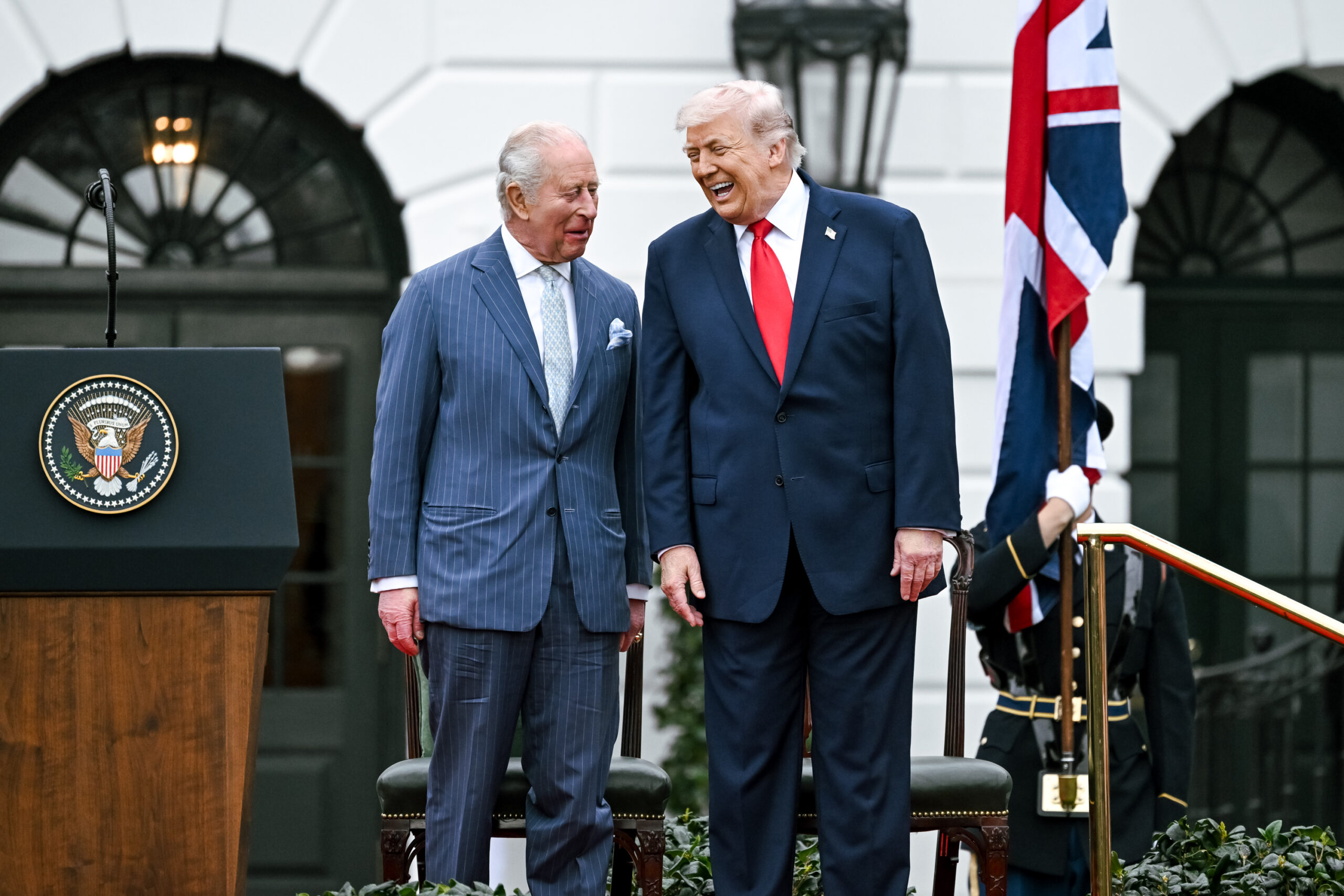
Trolling the #NoKings protestors!
The White House tweeted this photo yesterday with the caption “Two Kings!” 👑👑
Trolling the #NoKings protestors!
First Lady Melania Trump announced the expansion of the White House honey program by adding a newly installed, fully functional beehive on the South Lawn. Hand-crafted by a local artisan in the image of the White House, the beautiful new hive will add two new bee colonies to the two existing colonies that already produce the signature White House honey.

The White House beekeeping program has been a longstanding tradition since 2009, with the first hive installed during the Obama administration. The program has seen significant growth, with the addition of the new beehive on the South Lawn. This hive is not only a source of honey but also plays a crucial role in pollinating the nearby Kitchen Garden and supporting the National Mall’s vegetation. The bees in the White House hives contribute to the overall ecological balance and food production on the grounds.
While most modern countries have had their current form of government for less than 100 years — many less than 80 — America has been living under the same Constitution for 237 years.
Ratified in 1788 and taking effect in 1789, our Constitution created the world’s oldest continuous written constitutional republic. No other major nation has maintained the exact same foundational system of government for over two centuries.
We’re one of only a tiny handful of countries (alongside the ancient microstate of San Marino) whose core governmental framework has endured for more than 200 years without being replaced by revolution, conquest, or total constitutional overhaul.
That’s not just impressive history — it’s a testament to the genius of the document our Founders created. A system of limited government, separation of powers, checks and balances, and individual rights that has weathered civil war, world wars, economic crises, and massive social change… all while staying fundamentally the same.
In a world where governments come and go, America’s constitutional republic stands as one of the most durable and successful experiments in self-governance in human history.
Proud to live in the oldest constitutional republic on Earth.
For far too long, we’ve treated marijuana like a dangerous drug. At the same time, alcohol and tobacco – substances that kill hundreds of thousands of people every year – remain fully legal and heavily marketed. The science is clear: marijuana is far less harmful than alcohol, helps millions manage chronic pain, anxiety, PTSD, and epilepsy, and has legitimate medical value.
Criminalizing it has cost taxpayers billions in enforcement, filled our prisons with non-violent offenders (disproportionately affecting minority communities), and handed billions of dollars in profits to illegal cartels and black-market dealers.
Legalization means:
Personal liberty and common sense should win over outdated prohibition. Adults should have the right to consume a plant that grows naturally without harming others.
What do you think? Should marijuana be fully legalized nationwide?
Leave a comment below 👇
In the late 1970s, the U.S. government (under President Jimmy Carter) significantly increased subsidies for dairy farmers to prevent a shortage. This worked too well. Farmers produced so much milk that the government had to buy the surplus to keep prices stable. Since milk spoils quickly, the government processed it into massive amounts of butter, powdered milk, and 5-pound blocks of orange processed cheese.

By 1981, the government had stockpiled over 500 million pounds of cheese. It was stored in massive refrigerated underground limestone caves, mostly in Missouri. When the public learned that the government was sitting on mountains of aging cheese while people were hungry, it became a political scandal.
In December 1981, President Ronald Reagan signed a bill to release the surplus. The cheese was distributed to:
While the massive “giveaways” of the 80s are over, the government still distributes “commodity” foods to those in need today, though the packaging is usually a bit more modern than these classic bricks.
There was indeed a time when churches (both Protestant and Catholic) played a huge role in running charity hospitals in the US, especially from the 19th through mid-20th centuries. Many were founded to serve the poor, immigrants, and underserved communities when healthcare was more about basic care and compassion than high-tech medicine. Baptists, Presbyterians, Methodists, and other Protestant groups built their share alongside Catholics. But today, explicitly church-operated hospitals—particularly Protestant ones—are far rarer, and the landscape has shifted dramatically.
Early US hospitals often started as religious charities. Catholic orders (like the Sisters of Charity) were especially active, but Protestants founded many too—Baptists, Presbyterians, Methodists, Episcopalians, and others opened infirmaries and hospitals during the Second Great Awakening and the Industrial Revolution. These were typically nonprofit, donor-supported, and focused on “the here and now” practical help for the sick poor (unlike some Catholic emphases that also tied into preparing souls for the afterlife). By the early 1900s, hundreds existed across denominations.
Several overlapping economic, social, and structural factors explain why we don’t see many standalone Baptist- or Presbyterian-run hospitals anymore (though names like “Baptist Health” or “Presbyterian Hospital” still appear on some buildings):
There are still some Baptist and Presbyterian-linked systems:
Catholic hospitals still make up ~15–20% of US acute-care hospitals (one in six beds), and their systems are among the largest in the country. Protestant ones mostly shed direct denominational control to survive in the modern market.
In short, it’s less about “churches abandoning hospitals” and more about hospitals evolving (or being forced to evolve) into massive, regulated, capital-intensive businesses where the old charity model didn’t scale. The explicit religious branding and governance faded for most Protestants, while Catholics preserved more institutional identity through scale and structure. It’s a classic story of American healthcare’s shift from mission-driven charity to a complex mix of nonprofit, for-profit, and government-influenced care.
What aspect of this interests you most—specific examples of mergers, the Catholic contrast, or how this affects patients today?
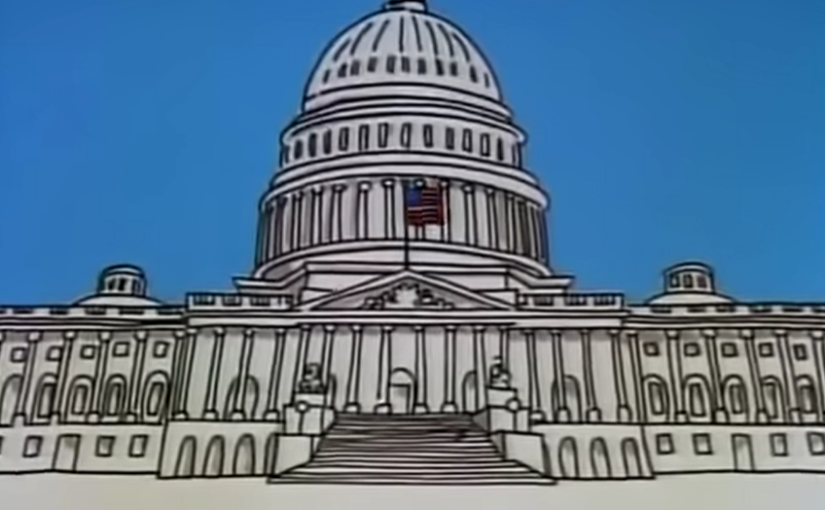
“I’m Just a Bill” is perhaps the most famous segment from the Schoolhouse Rock! series. It debuted on March 27, 1976—exactly 50 years ago today—as part of the “America Rock” season, timed to coincide with the U.S. Bicentennial.
In the complex landscape of American governance, one of the most debated powers is the President’s ability to deploy the military without a formal declaration of war from Congress. While the Constitution attempts to balance this power, the reality of modern warfare has shifted the scales toward executive action.
The authority for independent military action stems primarily from Article II, Section 2 of the U.S. Constitution, which states:
“The President shall be Commander in Chief of the Army and Navy of the United States, and of the Militia of the several States, when called into the actual Service of the United States.”
While Article I, Section 8 grants Congress the exclusive power “to declare War,” the Executive branch has historically interpreted the “Commander in Chief” clause as providing the inherent authority to repel sudden attacks or protect national interests abroad without waiting for legislative debate.
To prevent “presidential wars,” Congress passed the War Powers Resolution. This act serves as a procedural check, acknowledging the President’s need for speed while asserting congressional oversight.
Under this law, the President can initiate military action, but a strict “ticking clock” begins:
The President’s ability to act unilaterally is a marriage of constitutional interpretation and statutory limits. While the President holds the “sword” as Commander in Chief, the War Powers Resolution ensures that after 60 days, the power of the “purse” and the “pen” returns to Congress to decide if the conflict should continue.