On June 12, 2026, SpaceX completed the largest IPO in history, raising ~$75 billion and soaring to a $1.77–2+ trillion valuation. More than 4,400 current and former employees—from engineers to welders and support staff—saw their equity grants turn into at least $1 million each. Roughly 400 now hold $100 million+ stakes!
This massive wealth creation highlights the power of employee ownership at one of America’s most innovative companies. While shares remain subject to lock-ups and taxes, it’s a remarkable milestone for the team building our multiplanetary future.
What an inspiring success story! 🇺🇸
Category: Economics

Marijuana Reclassification
Historic Shift in Drug Policy
President Trump has officially moved to reclassify medical marijuana as a less dangerous drug! This major policy change marks one of the most significant shifts in federal drug enforcement in decades.
Here are the key takeaways from the announcement:
✅ Rescheduling: Medical marijuana is being moved from Schedule I to a less restrictive category, acknowledging its medical use.
✅ State Impact: This move aims to bridge the gap between federal law and the many states that have already legalized medical cannabis.
✅ Research & Access: The reclassification is expected to open doors for more clinical research and ease banking/tax hurdles for state-licensed businesses.
Is this a move in the right direction? Let us know what you think in the comments!
#BreakingNews #MarijuanaReform #TrumpAdministration #MedicalMarijuana #PolicyChange
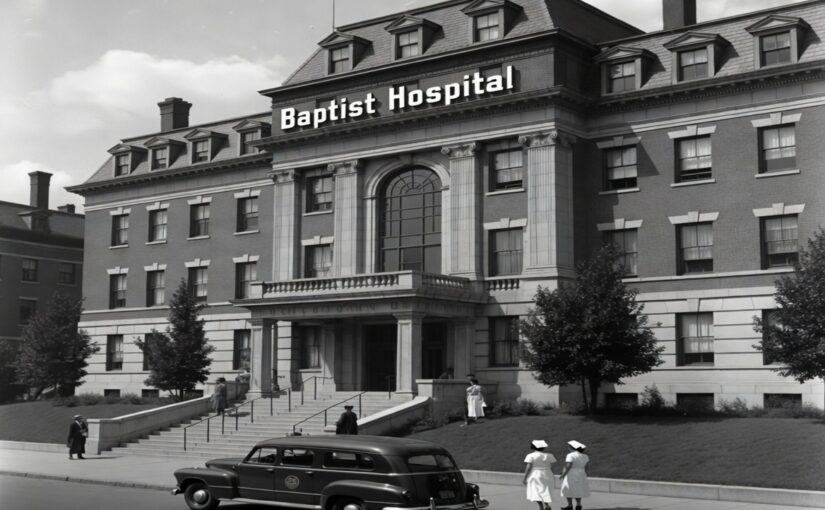
From Church Charity to Corporate Care
The Decline of Protestant Hospitals in the US
There was indeed a time when churches (both Protestant and Catholic) played a huge role in running charity hospitals in the US, especially from the 19th through mid-20th centuries. Many were founded to serve the poor, immigrants, and underserved communities when healthcare was more about basic care and compassion than high-tech medicine. Baptists, Presbyterians, Methodists, and other Protestant groups built their share alongside Catholics. But today, explicitly church-operated hospitals—particularly Protestant ones—are far rarer, and the landscape has shifted dramatically.
Historical Context
Early US hospitals often started as religious charities. Catholic orders (like the Sisters of Charity) were especially active, but Protestants founded many too—Baptists, Presbyterians, Methodists, Episcopalians, and others opened infirmaries and hospitals during the Second Great Awakening and the Industrial Revolution. These were typically nonprofit, donor-supported, and focused on “the here and now” practical help for the sick poor (unlike some Catholic emphases that also tied into preparing souls for the afterlife). By the early 1900s, hundreds existed across denominations.
Why the Big Decline (Especially for Baptists and Presbyterians)?
Several overlapping economic, social, and structural factors explain why we don’t see many standalone Baptist- or Presbyterian-run hospitals anymore (though names like “Baptist Health” or “Presbyterian Hospital” still appear on some buildings):
- Professionalization and the shift to business-like operations: Post-WWII (especially 1950s–1980s), medicine became expensive and high-tech. Hospitals needed professional administrators, not just clergy or nuns. Medicare and Medicaid (1965) brought government reimbursement but also strict regulations, reporting requirements, and a push for efficiency. Many church boards transitioned to lay leadership and independent nonprofit status to compete. What started as “compassion-based” became “science-based” then increasingly “profit-oriented” (even in nonprofits).
- Consolidation and mergers for survival: Healthcare costs soared, and small independent hospitals struggled. The industry consolidated into large systems. Protestant hospitals often merged with secular ones, sold to for-profits, or spun off as community nonprofits with only historical ties left. This was accelerated in the 1980s–2000s by competition and financial pressures.
- Protestant structure vs. Catholic centralization: Catholics maintained (and expanded) their footprint through dedicated religious orders, a hierarchical church structure, and unified ethical guidelines that enabled large national systems (e.g., CommonSpirit, Ascension). Catholic hospitals grew ~28% from 2001–2020 while non-Catholic hospitals declined ~14%. Other religious (mostly Protestant) nonprofits dropped even more sharply—by about 38% in some periods. Protestants are more decentralized (Baptists, especially, emphasize local congregational autonomy; Presbyterians, less so, but still not as centralized). Declining mainline Protestant membership (e.g., PCUSA lost huge numbers) also reduced institutional support.
- Government and societal changes: The welfare state (Social Security, Medicare, Medicaid, Hill-Burton Act funding) took over much of the “charity care” role that churches once filled. Tax-exempt status still applies to many faith-linked nonprofits, but they operate more like secular community hospitals to avoid legal issues around church-state separation or to serve broader populations. Secularization in American society also played a role—hospitals prioritized medical professionalism over denominational identity.
But Not Completely Gone
There are still some Baptist and Presbyterian-linked systems:
- Baptist: Baptist Health (Florida, Kentucky, etc.), Baptist Memorial Health Care (Arkansas, Mississippi, Tennessee), Baptist Health System (San Antonio). These are large nonprofits with historical Baptist roots but largely independent governance today.
- Presbyterian: NewYork-Presbyterian (a major academic center from a 1998 merger; now more secular in operation), Presbyterian Healthcare Services (New Mexico), and others that retain the name but function as community systems.
Catholic hospitals still make up ~15–20% of US acute-care hospitals (one in six beds), and their systems are among the largest in the country. Protestant ones mostly shed direct denominational control to survive in the modern market.
In short, it’s less about “churches abandoning hospitals” and more about hospitals evolving (or being forced to evolve) into massive, regulated, capital-intensive businesses where the old charity model didn’t scale. The explicit religious branding and governance faded for most Protestants, while Catholics preserved more institutional identity through scale and structure. It’s a classic story of American healthcare’s shift from mission-driven charity to a complex mix of nonprofit, for-profit, and government-influenced care.
What aspect of this interests you most—specific examples of mergers, the Catholic contrast, or how this affects patients today?
Gas Prices Keep Falling

Old Timer Will Remain
Sometimes just the threat of a boycott makes a difference.
New Cracker Barrel Logo
Why would you remove the literal cracker barrel from the Cracker Barrel logo?

The logo featured an actual wooden barrel—a nod to the store’s name and its inspiration from old country stores, where barrels of crackers were a common sight. The barrel was a central visual element, reinforcing the brand’s nostalgic, rustic identity.
The Switch to Corn Syrup
The Secret Meeting on Jekyll Island

Trump’s Plan: Goodbye to the Penny Coin
This may be the most cents-ible EO Trump has made
So long, penny! Trump orders US to ditch 1-cent coin after decades of complaints
The lowly penny, the forgotten mainstay of coin jars and car cupholders everywhere, may soon be no more.
President Donald Trump announced Sunday that he’s ordered his administration to cease production of the 1-cent coin, the buying power of which is long past its prime.