This wasn’t public health — it was the feds weaponizing left-wing groupthink. Small businesses, kids, and doctors paid the price. https://t.co/3b4JUehxHp
Universities do not exist to promote "marginalized voices." They do not exist to promulgate social engineering experiments. They do not exist to engage in social justice activism. A university exists to expand the boundaries of human knowledge, to defend truth, and to create…
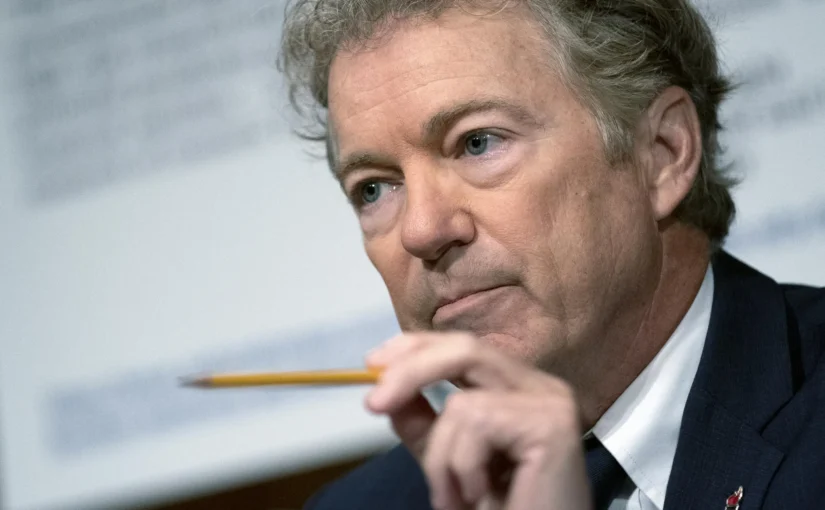
During a Senate Homeland Security Committee hearing, Dr. Anthony Fauci invoked the Fifth Amendment to decline answering all questions, including basic factual inquiries. This strategy followed a preemptive presidential pardon, leading Senator Rand Paul to challenge the legal validity of Fauci’s constitutional protections in this context.
Chairman Rand Paul announced a forthcoming committee vote to hold Fauci in criminal contempt of Congress. The dispute centers on whether a pardoned official can maintain Fifth Amendment privileges during congressional oversight. If passed, the resolution will move to the full Senate for a potential legal showdown.
Fauci Pleads the Fifth
If you thought the Senate COVID-19 hearings couldn’t get any more surreal, this week’s confrontation reached a whole new level.
Subpoenaed by Senate Homeland Security Committee Chairman Rand Paul, Dr. Anthony Fauci sat at the witness table and refused to answer a single question. But he didn’t just refuse to discuss complex virology, grant paperwork, or lab protocols—he took the Fifth Amendment on basic reality.
Taking “Stonewalling” to an Absurd Extreme
In a memorable exchange designed to test whether Fauci was acting in good faith, Senator Josh Hawley posed a series of completely non-incriminating baseline questions:
What day of the week is it?
What color is the carpet in front of you?
What color tie are you wearing?
What does the Fifth Amendment actually say?
To every single question, Fauci deadpanned the exact same script: “On the advice of counsel, I respectfully decline to answer based upon my rights under the Fifth Amendment to the Constitution.” He even pleaded the Fifth when asked if a red folder was sitting on the table directly in front of him.
To millions of Americans watching at home, the spectacle was baffling. If a public official cannot even confirm the color of the tie around his neck without invoking constitutional protection against self-incrimination, it shows just how far he is willing to go to avoid under-oath questioning.
The Next Phase: The Impending Contempt Vote
Because President Biden granted Fauci a broad, preemptive presidential pardon before leaving office, Senator Rand Paul argued that Fauci no longer has valid Fifth Amendment protections for past conduct, as he cannot face federal prosecution for those acts.
Having formally overruled Fauci’s assertion of privilege during the hearing, Chairman Paul announced that the Senate Homeland Security Committee will hold an official vote next week on whether to hold Dr. Fauci in criminal contempt of Congress. If the committee passes the resolution as expected along party lines, it will head to the full Senate floor, setting up a constitutional legal showdown in federal court over whether a pardoned official can use the Fifth Amendment to stonewall congressional oversight.
📹 Watch the Viral Hearing Exchange
You can watch the video of the exchange between Sen. Josh Hawley and Dr. Anthony Fauci below:
If you watched the Senate hearings between Senator Rand Paul and Dr. Anthony Fauci, you saw a masterclass in how government bureaucrats try to dodge accountability—and how a real physician fights back.
On paper, the fight looked like a dispute over scientific jargon. But at its core, it was about a fundamental truth: did the U.S. government help fund dangerous virus research in Wuhan, and did the man in charge lie about it to Congress?
The Allegation: Playing Word Games with Public Safety
The main issue came down to something called gain-of-function research—the practice of taking an existing virus and genetically modifying it to make it more infectious or deadly to humans so scientists can study it.
During the hearings, Dr. Rand Paul brought the receipts. He pointed directly to published research papers showing that NIH grant money, funneled through an organization called the EcoHealth Alliance, funded experiments at the Wuhan Institute of Virology. In these experiments, bat coronaviruses were modified to see if they could infect human cells.
When Paul called him out for funding this high-risk research, Fauci pushed back aggressively, claiming under oath that the NIH never funded gain-of-function research in Wuhan.
How could Fauci claim that? By hiding behind bureaucratic definitions. Instead of using the commonsense definition of making a virus stronger, Fauci relied on a hyper-narrow, internal agency rulebook to argue that the experiments technically didn’t meet the official standard. To anyone paying attention, it was a classic semantic dodge: change the definition of the word, and suddenly you aren’t lying anymore.
Why Dr. Rand Paul Was the Right Person for the Job
Fauci relied on the assumption that politicians wouldn’t understand the complex science well enough to challenge him. But he ran into a major problem: Rand Paul isn’t just a politician. He’s a licensed medical doctor.
Because Dr. Paul has a formal background in medicine and science, he couldn’t be easily intimidated by medical jargon or authority titles. He understood the underlying biology. When Fauci attempted to dismiss his questions with technicalities, Dr. Paul saw right through the performance and refused to let him off the hook.
Dr. Paul stood up as a watchdog for the American public. He argued that when public officials fund potentially dangerous bioweapon-style research overseas using taxpayer dollars—and then try to hide behind bureaucratic loops when asked about it—it puts the entire world at risk.
The Takeaway
Fauci pushed back with polished, defensive rhetoric, but Dr. Paul did something far more important: he established a record. By using his background as a physician to cut through the smoke and mirrors, Dr. Paul showed the country that holding powerful officials accountable requires asking tough questions and refusing to accept semantic games as the truth.
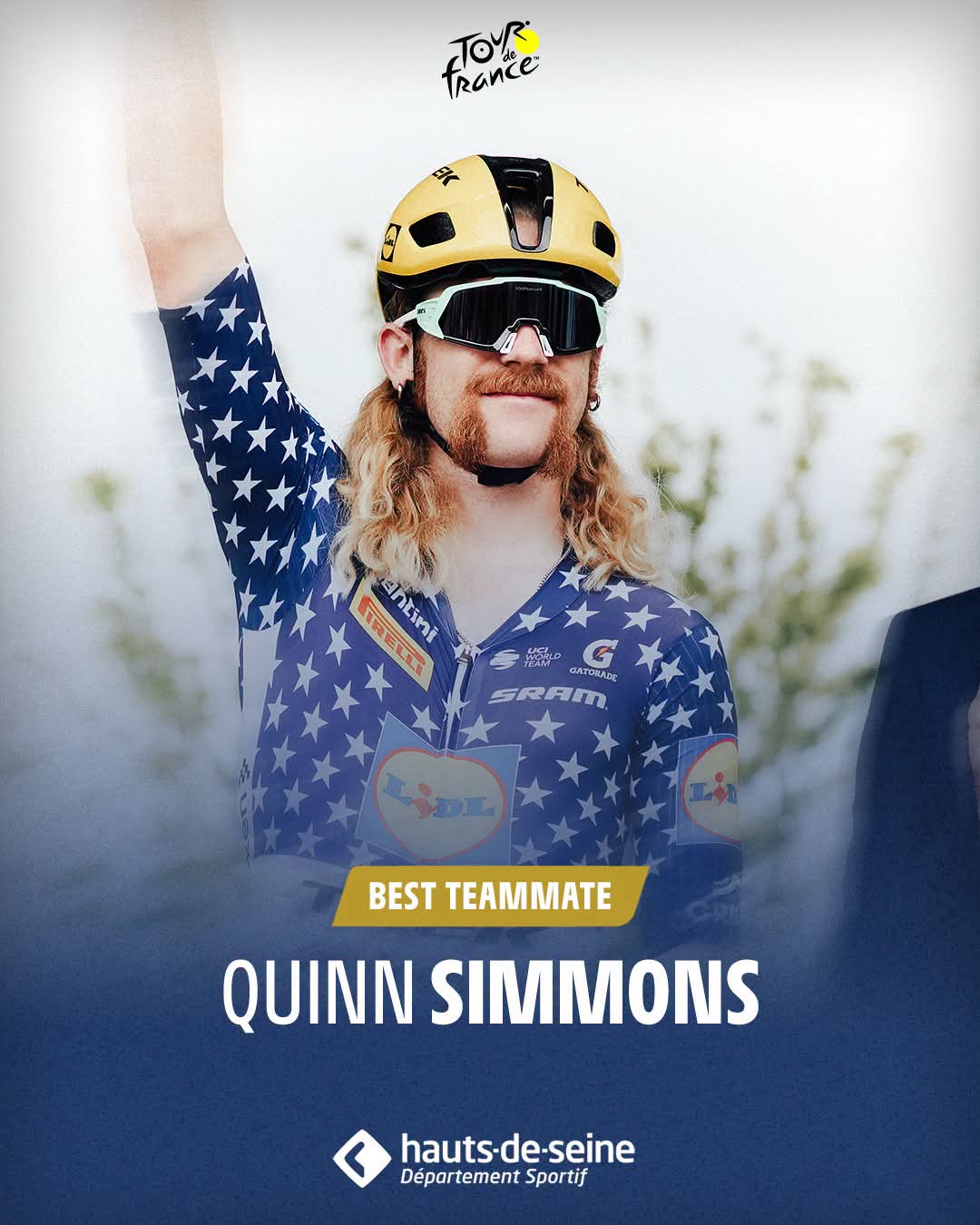
Quinn Simmons closed the Tour without the stage win he wanted, and he was open about the frustration of riding for team priorities instead of his own.
The Best Teammate award is a real recognition of the work he put in all race long — the breakaways, the lead-outs, and the consistent support. Classic domestique story: the individual result didn’t come, but the people who watch closely noticed the effort. Not a bad way to finish.
Heavenly sources have officially confirmed that posting the “folded hands” / “prayer hands” emoji (🙏) in response to someone’s social media post counts as performing an actual, genuine prayer for them, bringing relief to millions of social media users.
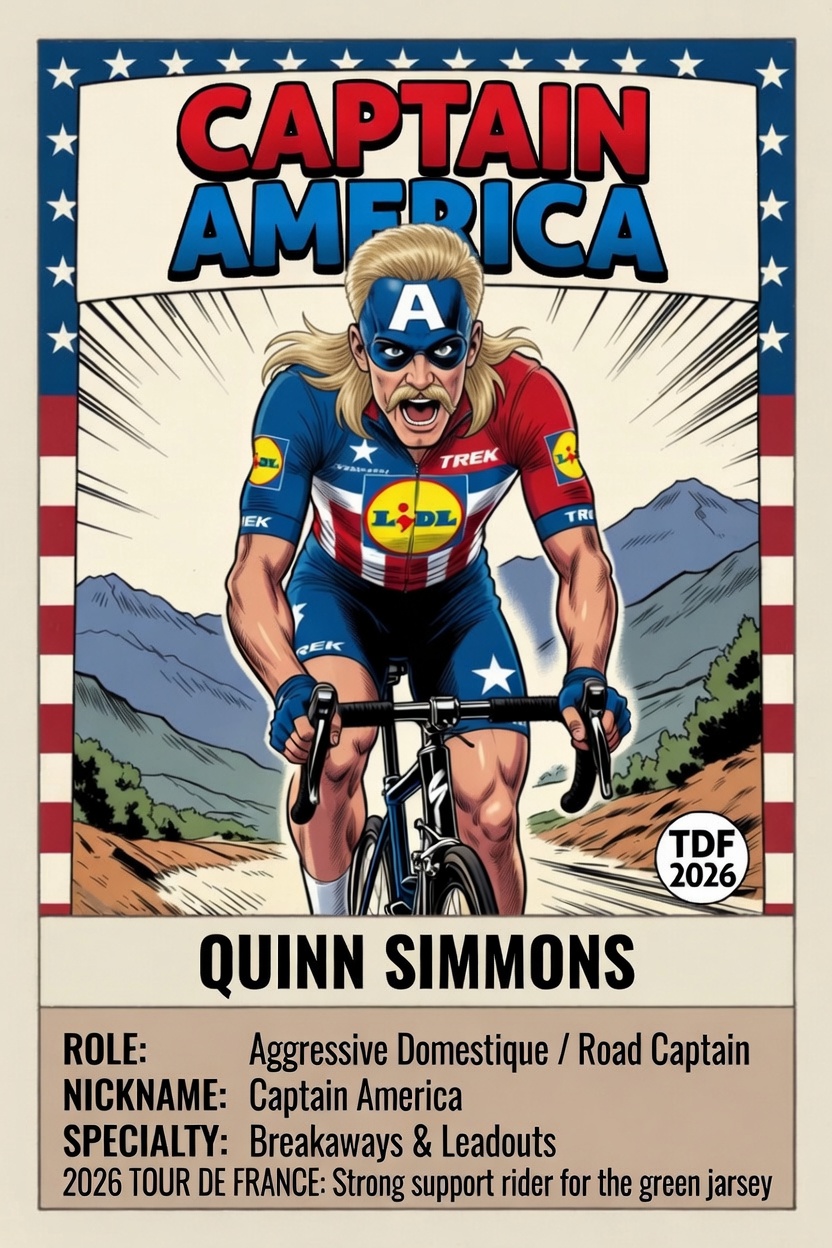
Through 18 stages of the 2026 Tour de France, Quinn Simmons has once again lived up to his “Captain America” nickname. The Lidl-Trek rider has been one of the most visible and aggressive Americans in the race — not always for personal glory, but as a tireless road captain and key support rider for the team’s dual goals of the green jersey and general classification.
Early Fireworks
The tone was set early. On Stage 4 into Foix, Simmons was instrumental in Lidl-Trek’s masterclass. He finished second behind teammate Mads Pedersen after a long day in the break, helping deliver the stage win while also positioning the team strongly in the overall standings. That same day, fellow American Sean Quinn came within seconds of the yellow jersey, creating a rare near-double for the U.S. riders.
Simmons continued to punch above his weight in the first two weeks — regularly featuring in breakaways, driving the chase when needed, and putting in the hard pulls that allow pure sprinters and climbers to conserve energy.
Supporting the Green Machine
Much of Simmons’ work has centered on protecting and advancing Mads Pedersen’s green jersey campaign. On multiple stages, including the run-in to Voiron on Stage 17 and the early part of Stage 18 to Orcières-Merlette, he was seen at the front of key groups, helping control the race and secure intermediate points. His presence has been a constant source of pressure on rivals, particularly Jasper Philipsen and Alpecin-Premier Tech.
The team classification has also benefited. Lidl-Trek has held a strong position for much of the race, and Simmons’ consistent finishing and willingness to work have contributed to that collective effort.
The Mountain Days
On the harder climbing stages, Simmons has shown the classic domestique’s understanding of when to go full gas and when to drop back. He was active and aggressive on Stage 15 (Plateau de Solaison) and again early on Stage 18 before easing off once the pure climbers took over. That selfless approach has kept him available for the team day after day.
Looking Ahead
With two consecutive summit finishes on Alpe d’Huez still to come, followed by the final stage into Paris, Simmons’ role will likely remain the same: protect the leaders, keep the pressure on in the breakaways when the opportunity arises, and finish the job as a reliable team man.
Captain America has already delivered a strong Tour. The final three stages will tell us whether there’s one more memorable moment left in the stars-and-stripes.