I did not have a leopard escaping from the Greenville Zoo on my bingo card for 2026!

Greenville Zoo’s leopard tranquilized, returned after escaping exhibit
I did not have a leopard escaping from the Greenville Zoo on my bingo card for 2026!
Greenville Zoo’s leopard tranquilized, returned after escaping exhibit
On June 28, 1776, South Carolina Patriots successfully defended Sullivan’s Island against a British naval assault. The fort used native palmetto logs to absorb cannon fire. Unlike traditional hardwoods, the spongy palmetto wood swallowed iron balls instead of shattering, allowing the garrison to withstand the bombardment and repel the fleet.
During the battle, Sergeant William Jasper risked his life to retrieve the fallen flag, signaling continued resistance to the British fleet. This victory forced the British to withdraw and established the palmetto tree as a symbol of American resilience. The event remains a significant moment in the Revolutionary War.
This post is part of an ongoing series, America 250.
The ultimate showdown between 18th-century military muscle and raw, accidental engineering took place on June 28, 1776, right here in South Carolina. Six days before the Declaration of Independence was signed in Philadelphia, a massive British fleet packed with over 200 heavy cannons dropped anchor off Charlestown Harbor. Standing in their way was an unfinished, rectangular dirt fort on Sullivan’s Island, manned by Colonel William Moultrie and a few hundred second-line Patriots.
The British expected a swift, brutal slaughter. They didn’t get one, all because of a humble, local tree: the Sabal Palmetto.
Standard military strategy dictated building fortifications out of dense, rigid hardwoods like live oak. When a heavy iron cannonball hits oak, the wood splinters violently, sending lethal shards flying inward like shrapnel. But Moultrie’s men didn’t have time for oak. They built their fort’s double-layered walls out of native palmetto logs, packing the 16-foot gap between them with dense, wet beach sand.
When the British flagships unleashed their first massive broadside, something extraordinary happened. The palmetto wood was incredibly soft, fibrous, and spongy. Instead of shattering or fracturing, the logs simply flexed. They swallowed the kinetic energy of the incoming 32-pound iron balls, burying them deep inside the spongy fibers or spitting them harmlessly out into the sand.
British gunners watched in sheer disbelief as their devastating artillery fire was literally absorbed by the walls. The fort was quite literally swallowing their attack whole, allowing the Patriots to conserve their scarce gunpowder and fire back with devastating precision.
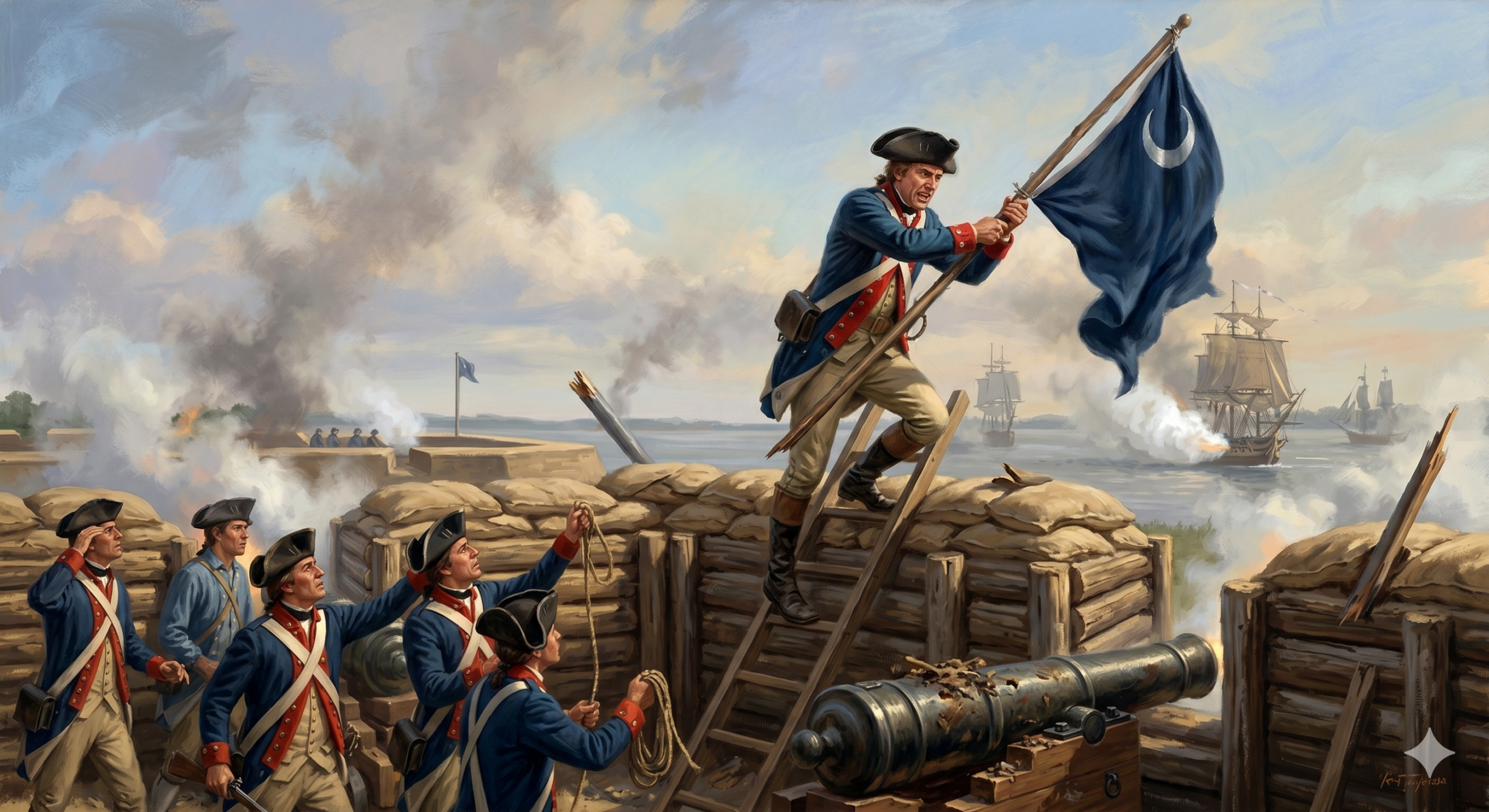
As the grueling ten-hour bombardment wore on, a British shot snapped the fort’s flagship staff, sending Colonel Moultrie’s blue “Liberty” banner tumbling outside the walls onto the open beach. To the fleet outside, a fallen flag meant surrender. To the men inside, it was a crushing blow to morale.
“Colonel, the flag has fallen!”
“Then we must bring it back.”
Sergeant William Jasper didn’t hesitate. Stepping out from the safety of the spongy fort, Jasper leaped through an open embrasure directly into a hail of active British cannon fire. He walked the exposed, exploding beach, retrieved the fallen banner, and climbed back up onto the ramparts.
Lacking a proper staff, he fixed the flag to a simple sponge-staff—the long wooden rod used to clean the cannons between shots. He drove it firmly into the sand, climbed back down, and calmly returned to his gun. That single act of defiance instantly rallied the garrison and signaled to the British that South Carolina had no intention of backing down.
By sunset, the humiliated British fleet cut their anchors and slipped away. The spongy palmetto had held, and Jasper’s bravery kept the spirit alive.
As we look toward the 250th anniversary of our nation, this story is the perfect example of revolutionary grit. The Patriots won not because they had better gear, but because they expertly adapted to their environment and refused to break under pressure. It’s the reason the palmetto tree proudly anchors the center of the South Carolina state flag today—a permanent monument to the day a spongy tree stumped the world’s greatest navy.
South Carolina has finally legalized pinball for minors after decades of outdated restrictions.
Originally invented during the Great Depression as a game of chance (without flippers), early pinball machines led many places to ban it for kids due to its gambling-like nature. Flippers in the late 1940s turned it into a game of skill, and by the late 1970s, nearly every state had lifted bans on minors playing—except South Carolina.
A new law signed by the governor last month removes pinball from the list of “status offenses” banned for those under 18. Efforts to change this had been ongoing since 2015 (a full decade). Though the ban was rarely enforced and kids played anyway, it created legal risks for business owners (especially bars worried about liquor licenses).

A scary scene unfolded this past Sunday evening, January 4, at the Viva Chicken on Pelham Road. An SUV crashed through the front entrance and glass windows of the restaurant.
Emergency crews, including the Boiling Springs Fire Department and Greenville County EMS, responded promptly to the scene. Officials reported eight total injuries, with three people transported to the hospital for treatment as priority patients.
The South Carolina Highway Patrol is still investigating the cause of the accident. Sending our thoughts to those who have been injured and hoping for a quick recovery.
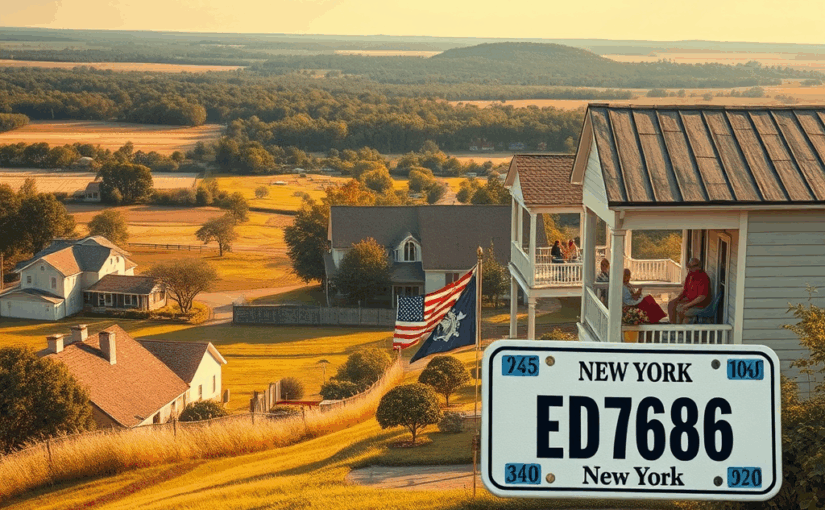
South Carolina has long been cherished for its slower pace of life, tight-knit communities, and deeply rooted conservative values. But lately, many lifelong residents are starting to worry that these traditions are at risk — not because of natural growth or change, but because of an influx of new residents from states like New York who, some believe, may be bringing along the very political ideas they were trying to escape.
Across the Palmetto State, new developments are rising, small towns are swelling, and license plates from the Northeast are more common than ever. Many of these newcomers are seeking lower taxes, less regulation, and a more affordable cost of living — all of which South Carolina proudly offers. The concern, though, is that once people settle in, they begin voting for the same high-tax, big-government policies that drove them out of places like New York in the first place.
South Carolina’s culture is built on self-reliance, faith, family, and limited government. It’s a place where neighbors still wave from the porch and where people believe in individual responsibility. The fear among locals is that if new arrivals push for the same political shifts that have changed other states, South Carolina could lose what makes it special.
This isn’t about rejecting newcomers — it’s about preserving the character and principles that make this state a refuge in the first place. If you move here, embrace what drew you. Respect the culture. Understand that many South Carolinians are proud of their values, not ashamed of them.
People are welcome in the Palmetto State, but the message is simple: don’t try to turn South Carolina into the place you left behind.
I did not have radioactive wasps in South Carolina on my 2025 Bingo card!

Radioactive wasp nests have been found near former nuclear weapons production site
Look, it’s a bird! It’s a plane! No, it’s a meteor!

Did you see it? Multiple reports of ‘fiery ball’ falling from the sky in Upstate and beyond
Nikki Haley said this about the Confederate flag and the Mother Emmanuel shooting.
“When I became governor, the Confederate flag was a defining issue for how a lot of Americans regarded South Carolina. I made a point, early on, of talking to both Republicans and Democrats to see if there was the political will to take the flag down once and for all. Members from both parties pushed back against the idea.”
“But the images of the Charleston killer with the Confederate flag changed all that. The Mother Emmanuel shooter had made sure that anyone who saw the Confederate flag would now think of the killer and the image of him holding it. Clearly, something had to be done.”
With All Due Respect