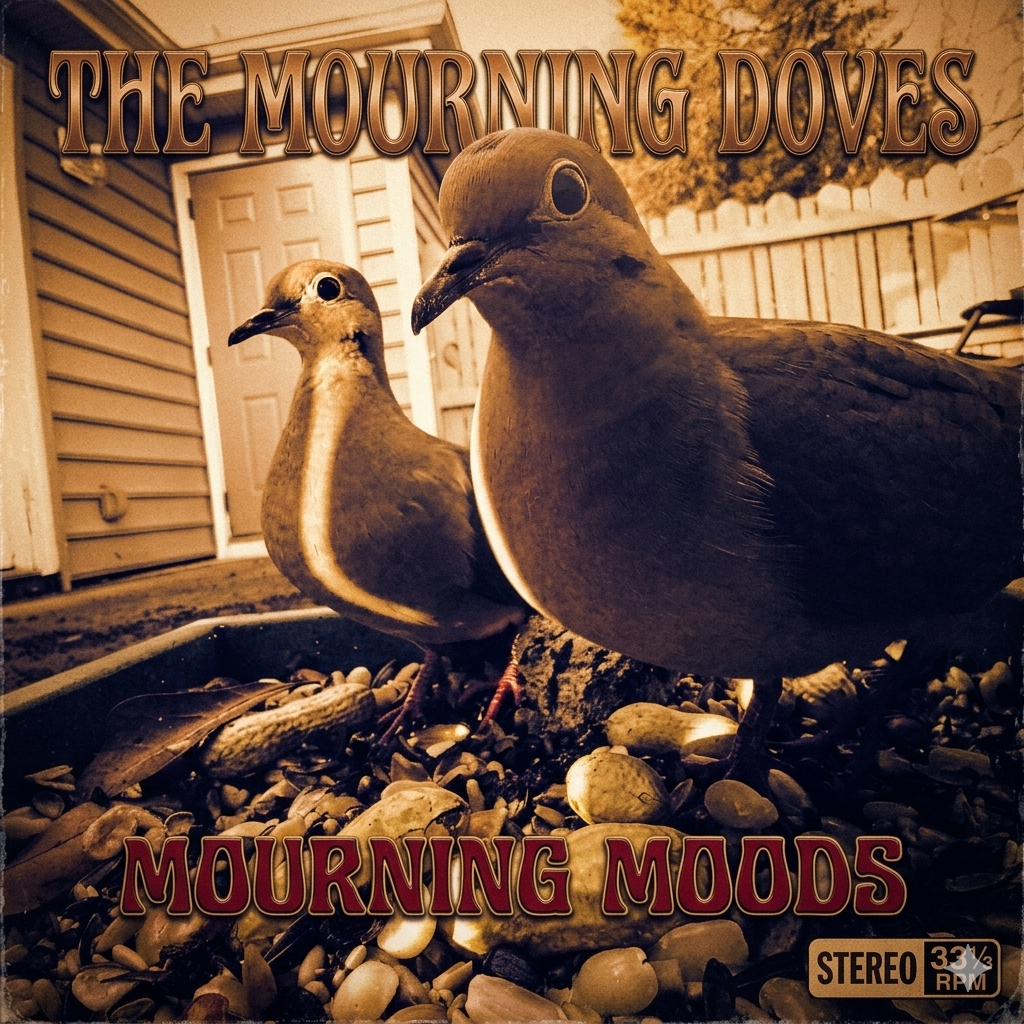
This is the best selling album from the Mourning Doves.
It features the runaway number one hit “Peanuts in the Rain.”
It’s that classic 1970s soft-rock anthem—heavy on the melancholic flute solo, with a chorus that everyone hums while staring out a window. It spent six weeks at the top of the charts because it perfectly captured that “waiting for the bird feeder to be refilled” existential dread.
Other fan favorites from the B-side include: “Cooing at the Moon” – A psychedelic power ballad. “No Mustard, No Onions (Just Seeds)” – A surprisingly upbeat track about being picky at the feeder. “The Suburban Fence Line” – A 7-minute progressive folk odyssey.
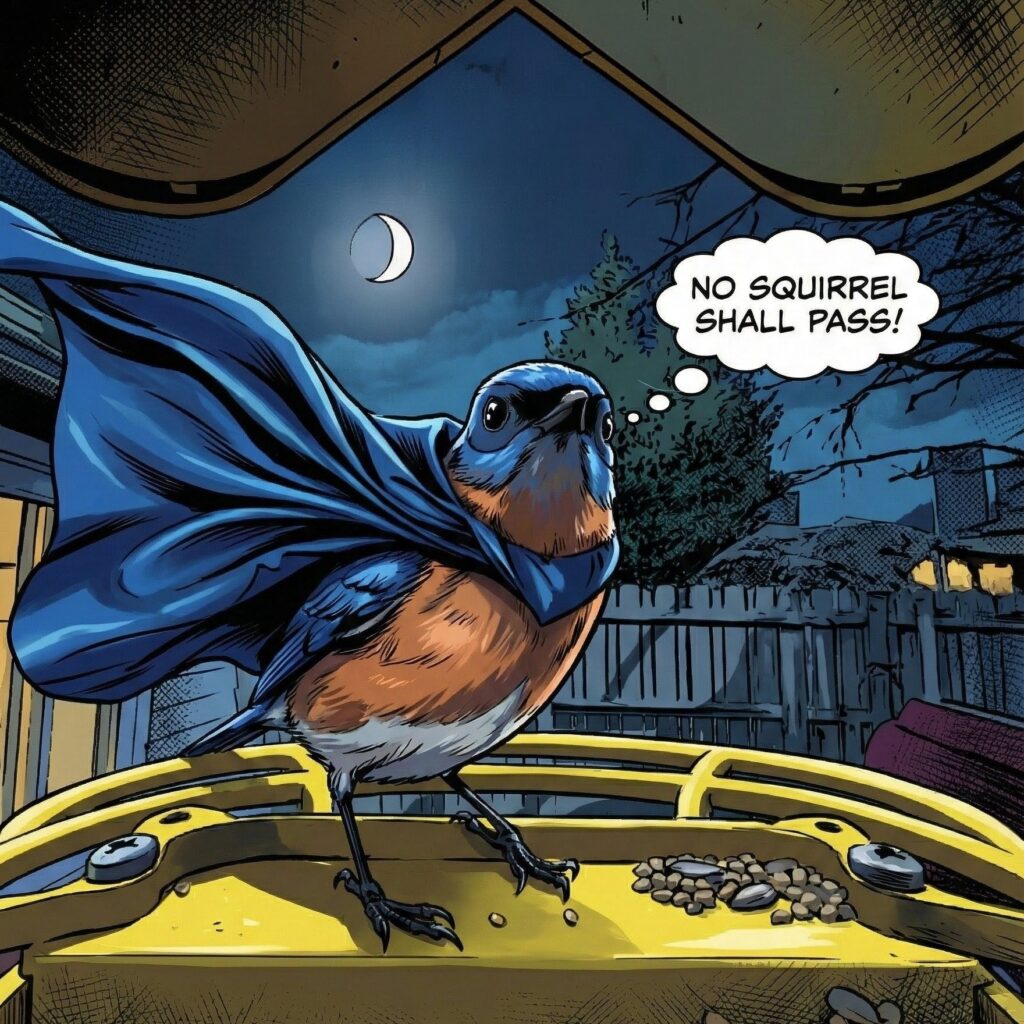
By day, he is just Barry, a mild-mannered Eastern Bluebird with a penchant for mealworms and cheerful warbling. But Barry harbors a dark past. Seasons ago, during the Great Famine of Mid-February, Barry watched helplessly as the notorious “Bushy-Tail Syndicate”—a ruthless gang of gray squirrels—raided the neighborhood’s prime feeder. They didn’t just eat; they destroyed. They spilled the premium black oil sunflower seeds onto the muddy ground below, laughing their chittering laughs. The carnage changed Barry. He realized that being just another pretty songbird wasn’t enough. The backyard needed a guardian. A symbol. Scavenging a scrap of highly durable, weather-resistant blue fabric dropped near a human’s clothesline, Barry fashioned a cowl to mask his identity and a cape to aid his aerodynamic dives. He trained in the shadows of the deck, honing his skills: stealth gliding, super-avian vision capable of spotting a whisker twitch at fifty yards, and the “Beak of Justice”—a rapid-peck technique that can disarm a rodent three times his size. Now, when the sun sets and the nocturnal pests emerge, Barry leaves his nest. He perches silently on the yellow Bird Buddy feeder, a lone sentinel against the chaos. He is the terror that flaps in the night. He is the guardian of the grain. He is… The Caped Cruseeder.