The Commander-in-Chief and the 60-Day Clock

In the complex landscape of American governance, one of the most debated powers is the President’s ability to deploy the military without a formal declaration of war from Congress. While the Constitution attempts to balance this power, the reality of modern warfare has shifted the scales toward executive action.

The Constitutional Foundation

The authority for independent military action stems primarily from Article II, Section 2 of the U.S. Constitution, which states:

“The President shall be Commander in Chief of the Army and Navy of the United States, and of the Militia of the several States, when called into the actual Service of the United States.”

While Article I, Section 8 grants Congress the exclusive power “to declare War,” the Executive branch has historically interpreted the “Commander in Chief” clause as providing the inherent authority to repel sudden attacks or protect national interests abroad without waiting for legislative debate.

The War Powers Resolution of 1973

To prevent “presidential wars,” Congress passed the War Powers Resolution. This act serves as a procedural check, acknowledging the President’s need for speed while asserting congressional oversight.

Under this law, the President can initiate military action, but a strict “ticking clock” begins:

  • 48-Hour Notice: The President must notify Congress within 48 hours of committing armed forces to hostilities.
  • The 60-Day Limit: The President has 60 days to continue military operations. If Congress does not grant a formal declaration of war or a specific statutory authorization (like an AUMF) within that window, the President is required to withdraw those forces.
  • 30-Day Extension: An additional 30 days may be granted solely to ensure a safe withdrawal of troops.

Summary

The President’s ability to act unilaterally is a marriage of constitutional interpretation and statutory limits. While the President holds the “sword” as Commander in Chief, the War Powers Resolution ensures that after 60 days, the power of the “purse” and the “pen” returns to Congress to decide if the conflict should continue.

Potts Dogs Rebranding

Just saw the news that the Potts Dogs in Nazareth is rebranding and overhauling the menu after 50 years. 🌭

I never made it to that specific location—I was a regular at the Bethlehem shop back in my college days—but seeing a local classic change this much is still tough to watch. Apparently, they are adding a “tropical flair” to the new menu.

I’m sorry, but I just can’t get behind that. Pineapple does not belong on a hot dog. 🍍 Some things are sacred! Just give me the classic chili sauce any day.

Crash at Viva Chicken in Greer

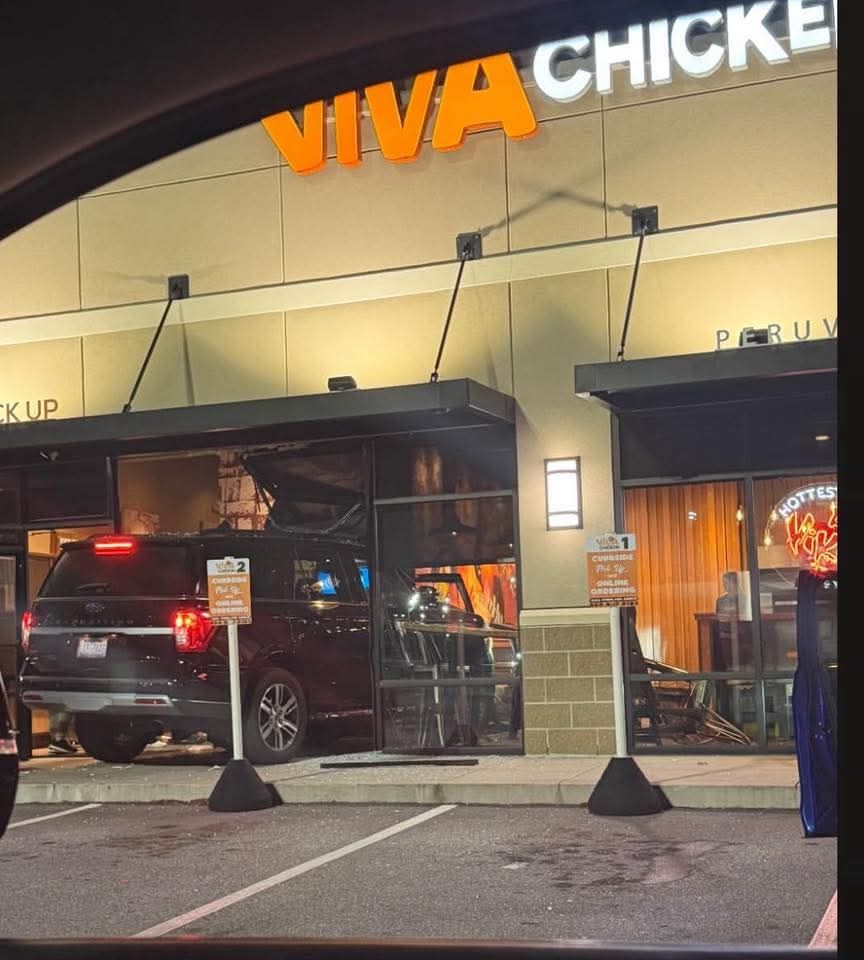
A scary scene unfolded this past Sunday evening, January 4, at the Viva Chicken on Pelham Road. An SUV crashed through the front entrance and glass windows of the restaurant.

Emergency crews, including the Boiling Springs Fire Department and Greenville County EMS, responded promptly to the scene. Officials reported eight total injuries, with three people transported to the hospital for treatment as priority patients.

The South Carolina Highway Patrol is still investigating the cause of the accident. Sending our thoughts to those who have been injured and hoping for a quick recovery.

Young Boys Dreams

This is a story that I’m sure my Dad told dozens of times throughout his life. His good friend Rick Paashaus wrote down the story and posted it on Facebook just days after my Father’s passing.

In the upstate Pennsylvania town of Gordon, Wolfgang’s Sporting Goods Store was the place for buddies to gather and make world-changing decisions. Retired “coal crackers,” the old boys came daily for conversation and lingered over a cup of coffee and kibitzing with the neighbors. Life was good in the postwar era when miners could make a decent living and retire to live out their days in their clapboard houses along Main Street. 

Jim loved the old store. Tommy Wolfgang welcomed not just the retired guys but also the young boys with their dreams. The 10-year-old would stop anytime he could to browse and listen to the old guys share their stories, their Monday morning quarterbacking, stories of the big one that got away.

But Jim usually had one thing in mind.

A baseball lover, one mitt caught his eye. Wouldn’t it be the cat’s meow to own such a beauty? But the $12.00 price tag was far too steep in the 1950s. He tried it on, punched his hand in it, looked at the price tag, and carefully replaced it on the shelf at least once a week for months. The old boys looked on with their own memories glistening in their eyes.

One Saturday, when Jim tried on that glove again, the owner pulled him aside. “Jim, you should enter our raffle. Tickets are only a quarter each, and at the end of this month, we’re picking one. The winner gets a $10.00 gift certificate. Do you have a quarter?”

Jim shook his head, but smiled…knowing just what to do. He headed home and, for the next week, gathered up as many pennies and nickels as he could find. He picked up a bottle of milk from the grocer for his Uncle, who lived nearby, and smiled when the kind-hearted man said, “Keep the change.” Another dime. Finally, he had enough for the raffle! Racing to the Sporting Goods Store, he handed over the quarter in exchange for what he hoped would be the winning ticket. Ticket #154.

“When is the drawing?” the little boy asked.

“Next Saturday morning at 10:00. Make sure you’re here!” Tommy Wolfgang said with a grin.

Saturday finally came, and at 9:30 am, Jimmy was there, ticket #154 in his hand. The gang that usually gathered for gossip and coffee was there as well. When 10:00 came, each of them expectantly held their own ticket in hand. The owner shook the box with a flourish, dragging out the event, then finally reached deep inside and pulled out a single ticket.

He squinted as Jim waited anxiously, and the old men held their tickets up to the light. “The winner is… #154!” The men all groaned and acted disappointed, but each had a strange smile on their face.

“Jim! You win!” Tommy announced. Then he added, “You know, that glove you’ve been eying up is just a bit more than the $10.00, but I’d be willing to have you take it as your prize if you choose!”

With a huge grin, the 10-year-old said, “Yes, Sir!” sliding that oversized mitt on his hand. He was the winner! The men congratulated him, gently slapping him on the back, punching his arm. “Good Job, Jim! Enjoy!”

It wasn’t until years later, as Jim reminisced about that day, that he thought: “Hmmm. I wonder why only those old men had tickets? I wonder why so few were sold? I wonder why there was no poster or flyer on the cash register inviting others to participate?” He finally realized that, between Tommy Wolfgang and the guys standing around the hunting gear and fishing poles, not only was the “raffle” concocted, but also the coins and bills gathered by those old Coal Crackers were all prearranged to make one little baseball player’s dreams come true.

Yes, this story is true… and yes, the little boy grew up to be my friend, Jim Trommetter. Jim passed away late last week. Just a few days before his death, he shared the story with me (again), and I share it with you in his honor. It may not be a “devotional,” but I thought it was worth repeating.

Rest in peace, my friend.

The Humble Penny

How Many Are Still Out There?

The question of how many pennies are currently in circulation in the United States yields a surprisingly broad answer. While it’s difficult to pin down an exact figure, estimates from authoritative sources like the Federal Reserve, the U.S. Mint, and the American Bankers Association suggest a vast number: anywhere from an estimated 114 billion to 300 billion pennies.

This wide range is largely because a significant number of pennies are stored in homes—think coin jars, drawers, and car cup holders—and are thus severely underutilized in daily commerce. This makes precise tracking of the active money supply a challenge for financial institutions.

Despite the common use of the penny, the U.S. Mint made a significant announcement to cease circulating production in November 2025. Pennies, however, will remain legal tender and can continue to be used for transactions. The decision to halt production was purely an economic one: it was costing the government approximately 3.7 cents to produce a single one-cent coin, leading to an annual financial loss.

So, what’s next for the humble one-cent coin? The existing supply will gradually diminish over time as pennies are lost or otherwise removed from circulation. In the future, some retailers might adopt a practice of rounding cash transactions to the nearest nickel, a system already in place in countries such as Canada. For collectors, the U.S. Mint will still produce numismatic (collector) versions of the penny in limited quantities, ensuring the coin’s legacy endures even as its role in everyday commerce fades.

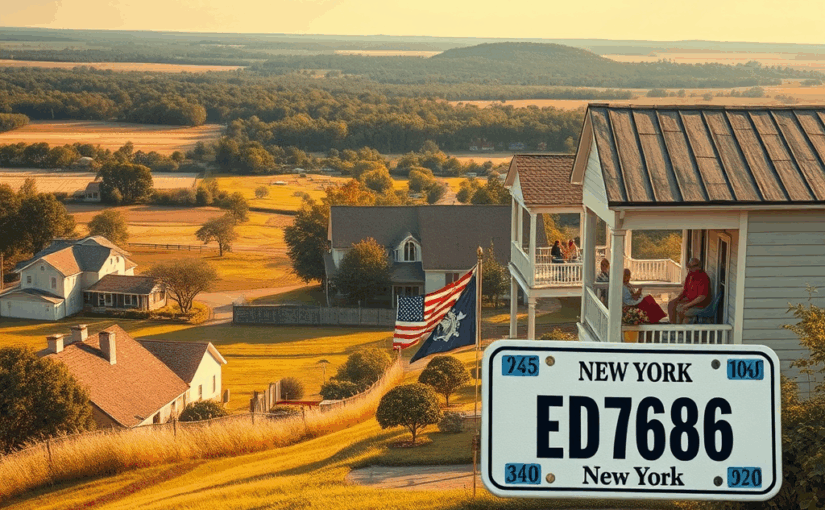
New Yorkers, Please Don’t Bring New York to South Carolina

South Carolina has long been cherished for its slower pace of life, tight-knit communities, and deeply rooted conservative values. But lately, many lifelong residents are starting to worry that these traditions are at risk — not because of natural growth or change, but because of an influx of new residents from states like New York who, some believe, may be bringing along the very political ideas they were trying to escape.

Across the Palmetto State, new developments are rising, small towns are swelling, and license plates from the Northeast are more common than ever. Many of these newcomers are seeking lower taxes, less regulation, and a more affordable cost of living — all of which South Carolina proudly offers. The concern, though, is that once people settle in, they begin voting for the same high-tax, big-government policies that drove them out of places like New York in the first place.

South Carolina’s culture is built on self-reliance, faith, family, and limited government. It’s a place where neighbors still wave from the porch and where people believe in individual responsibility. The fear among locals is that if new arrivals push for the same political shifts that have changed other states, South Carolina could lose what makes it special.

This isn’t about rejecting newcomers — it’s about preserving the character and principles that make this state a refuge in the first place. If you move here, embrace what drew you. Respect the culture. Understand that many South Carolinians are proud of their values, not ashamed of them.

People are welcome in the Palmetto State, but the message is simple: don’t try to turn South Carolina into the place you left behind.

Fetterman’s Call for Country Over Party

It’s a strange day indeed when Senator John Fetterman is the voice of reason in Washington.

“It’s an easy, easy choice to pick my country over the party, especially in circumstances like this,” Fetterman said, speaking about the government shutdown.

I’ve often said our country was founded by geniuses, but it’s being run by idiots.

Senator John Kennedy

Radioactive Wasps Discovered in South Carolina

I did not have radioactive wasps in South Carolina on my 2025 Bingo card!

Radioactive wasp nests have been found near former nuclear weapons production site