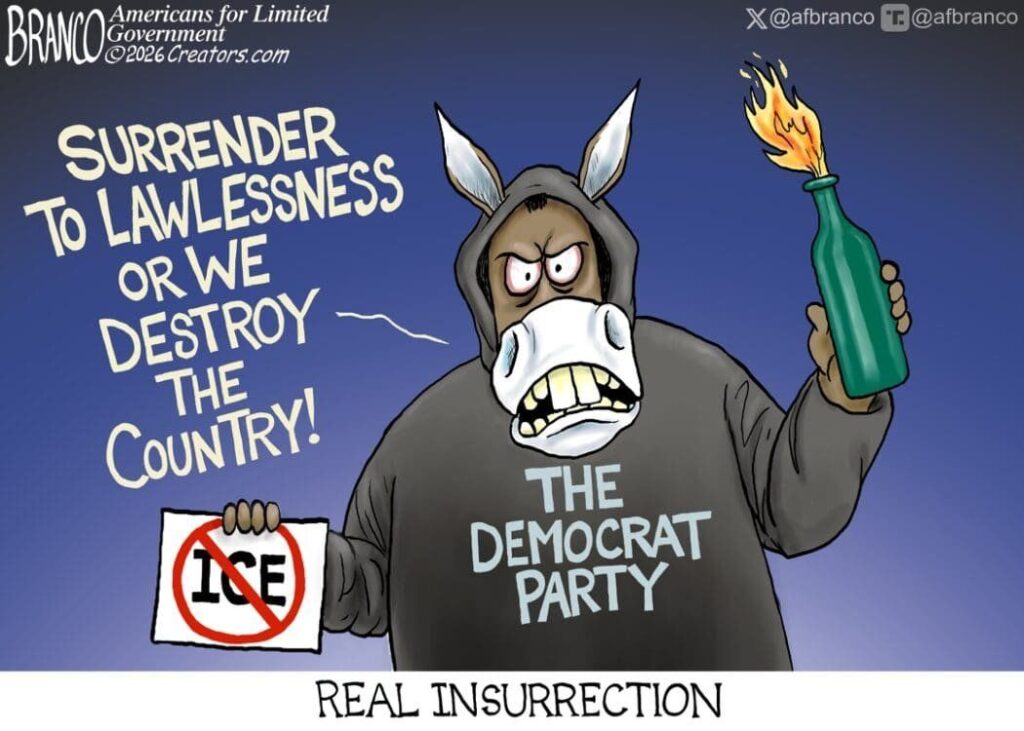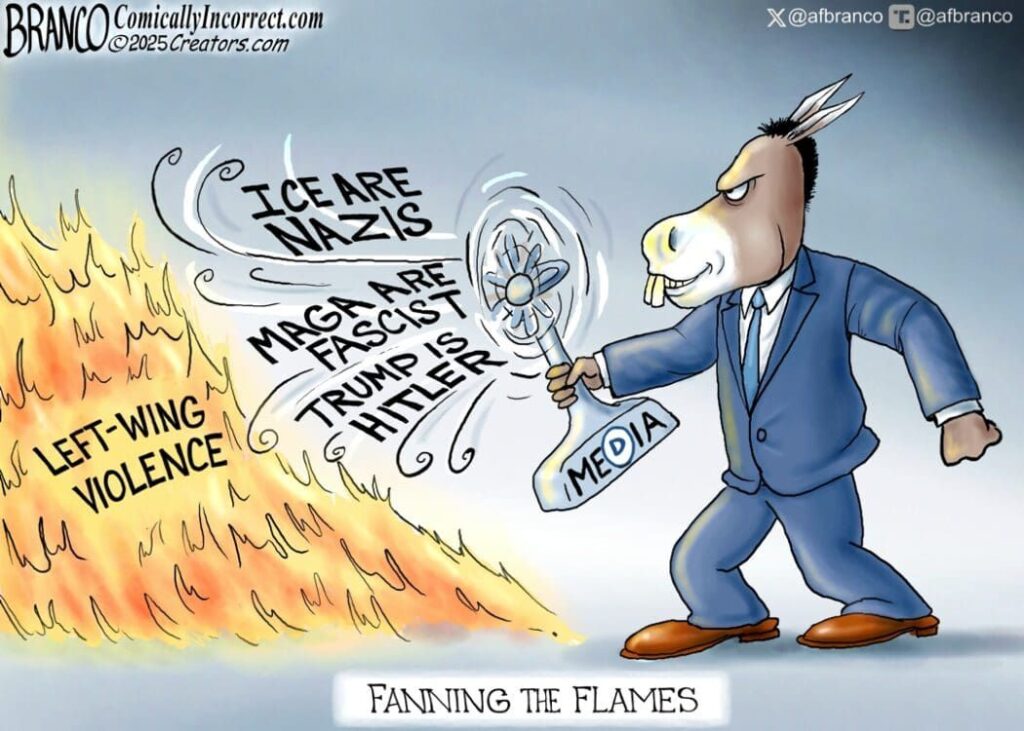
Law and Order, Not Chaos

Why Red States See High ICE Arrests but No Unrest

When you look at the map of ICE enforcement across the country, a distinct pattern emerges. States with Republican governors—like Texas, Florida, and Georgia—are putting up some of the highest arrest numbers in the nation. In the first ten months of 2025 alone, Texas saw over 54,000 arrests, and Florida recorded more than 23,000.

Given the sheer volume of enforcement activity, you might expect these states to be hotbeds of tension, protests, and public outcry. But the reality on the ground is starkly different. While headlines in other parts of the country often focus on clashes between activists and federal agents, Republican-led states have remained remarkably calm.

The question is: Why?

The answer lies in a fundamental difference in governance and community expectations. In these states, the absence of unrest isn’t an accident—it’s the direct result of a culture that prioritizes the rule of law and cooperation between local and federal authorities.

The Power of Cooperation

In many Democratic-led “sanctuary” jurisdictions, local law enforcement is often barred from communicating with ICE. This friction creates a chaotic environment in which federal agents are forced to operate in the shadows, often leading to high-profile, contentious operations that spark public outrage.

In contrast, Republican states generally embrace a philosophy of seamless cooperation. Sheriffs and local police departments work hand in hand with federal immigration officials. Because this partnership is established and transparent, enforcement actions are routine rather than disruptive. When local law enforcement treats federal immigration laws as valid and enforceable—rather than something to be resisted—it sets a tone of legitimacy that permeates the community.

A Community That Respects the Process

Perhaps the most significant factor is the residents’ attitude. In states like Texas, Tennessee, and South Carolina, there is a prevailing belief that law enforcement agencies should be allowed to perform their duties without interference.

You don’t see residents forming human chains to block ICE vans or local politicians encouraging non-compliance. Instead, there is a general understanding that maintaining public safety involves enforcing all laws, including those at the federal level. The lack of protests isn’t a sign of apathy; it is a sign of a citizenry that respects law enforcement’s operational authority.

Conclusion

The data from 2025 makes one thing clear: high enforcement numbers do not have to equal social instability. The stability seen in Republican-led states proves that when local leaders cooperate with federal partners and communities respect the rule of law, the system works as intended—efficiently, quietly, and without chaos.
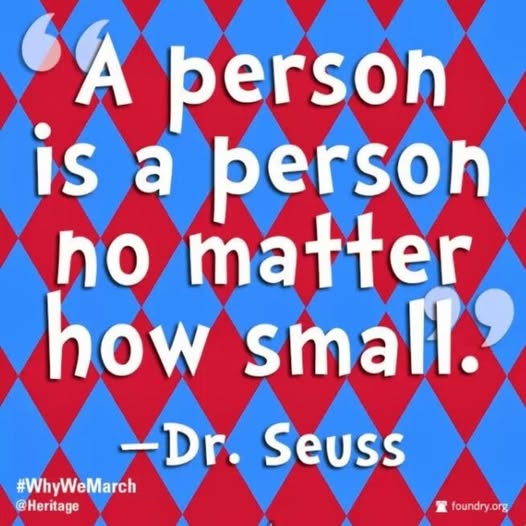
Value All Lives

“A person is a person no matter how small.” ~Dr. Seuss

The Sanctuary Line

Why the DOJ is Using the FACE Act in Minnesota

When we hear “FACE Act,” most of us immediately think of reproductive health clinics. For decades, the Freedom of Access to Clinic Entrances Act has been the primary tool for prosecuting individuals who physically block access to abortion providers.

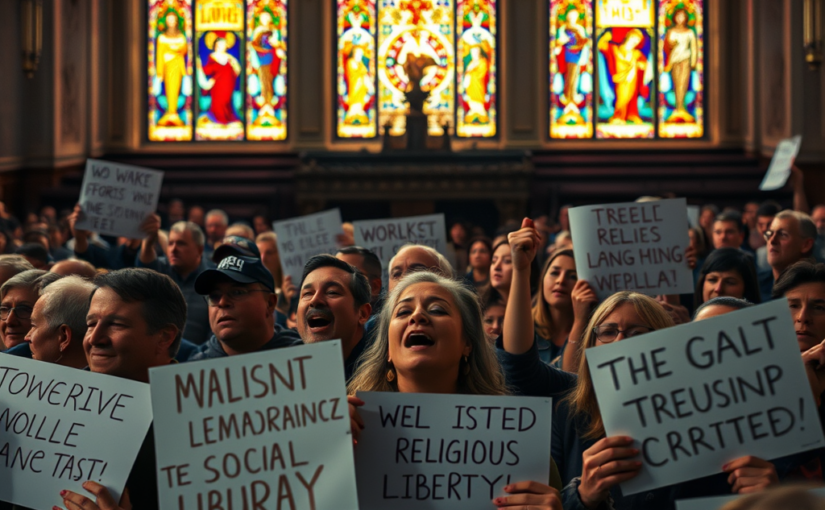
But this week, a dramatic scene at a church in St. Paul, Minnesota, is reminding the country of a lesser-known but equally powerful provision of that same 1994 law: the protection of religious liberty.

Following the invasion of Cities Church by agitators on January 18, the Department of Justice has signaled a major shift in enforcement, launching a federal investigation into whether the disruption violated the civil rights of the congregants inside. Here is why this case matters and how a law designed for clinics is now shielding the pews.

The Incident in St. Paul

On Sunday, January 18, 2026, the morning service at Cities Church was abruptly halted. Protesters affiliated with anti-ICE and Black Lives Matter groups entered the private sanctuary to confront a pastor whom they alleged was an ICE official involved in a recent controversy.

Eyewitnesses and video footage show the group marching into the nave, chanting slogans like “ICE Out,” and effectively stopping the worship service. While political protest is a cornerstone of American democracy, the critical legal question here is where that protest took place. By crossing the threshold from the public sidewalk into the private sanctuary, the agitators moved from protected speech to potential federal criminality.

The Legal Hook: 18 U.S.C. § 248(a)(2)

While the media often focuses on the “Clinic” part of the FACE Act, the statute’s full text is explicitly broader. Section (a)(2) makes it a federal crime for anyone who:

“By force or threat of force or by physical obstruction, intentionally injures, intimidates or interferes with or attempts to injure, intimidate or interfere with any person lawfully exercising or seeking to exercise the First Amendment right of religious freedom at a place of religious worship.”

To secure a conviction, federal prosecutors don’t need to prove that the protesters were violent. They simply need to prove three things:

  1. Intent: The goal was to disrupt the service.
  2. Obstruction: The agitators’ physical presence made it impossible or unreasonably difficult for congregants to worship.
  3. Protected Activity: The victims were engaged in religious exercise at a house of worship.

A “House of Worship is Not a Public Forum”

The distinction between “public” and “private” is the linchpin of this investigation. Assistant Attorney General Harmeet Dhillon of the DOJ’s Civil Rights Division was blunt in her assessment earlier this week, stating that “a house of worship is not a public forum.”

This is a critical legal concept. You have a right to protest on the sidewalk outside a church. You do not have the right to commandeer a private religious service to amplify your message. The DOJ is arguing that by invading the sanctuary, the agitators engaged in “physical obstruction” and “intimidation”—tactics that strip congregants of their safety and their constitutional right to worship in peace.

Why This is a Turning Point

Historically, the “religious worship” clause of the FACE Act has been gathering dust. Despite numerous acts of vandalism and disruption at churches over the last decade, federal charges have been rare, with most incidents relegated to state-level trespassing misdemeanors.

The swift federal response in Minnesota suggests the Department of Justice is adopting a new, more aggressive posture. By elevating this incident to a federal civil rights investigation, the DOJ is sending a clear message: the federal government views the sanctity of a church service as equal to the sanctity of a clinic.

The Bottom Line

The events at Cities Church have set up a major test for the FACE Act in 2026. If the DOJ successfully prosecutes these agitators, it will establish a powerful precedent that protecting “access” means protecting the ability to pray without intrusion, regardless of the political grievances of those outside the doors.


Today’s Comic

Justice or Order?

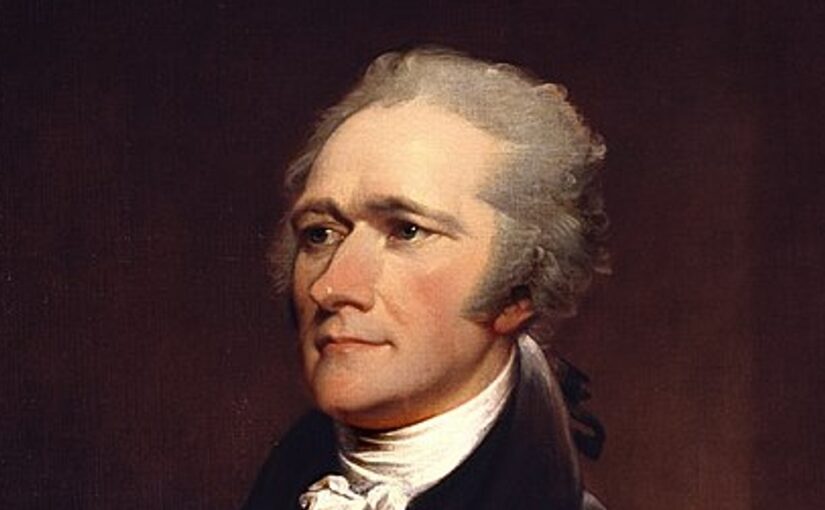
The Real Meaning Behind Hamilton’s Famous Quote

“I think the first duty of society is justice.”

It sounds like a modern plea for equity or fairness. You might expect to see it on a protest sign or in a civil rights essay. But when Alexander Hamilton wrote these words in August 1794, he wasn’t calling for social reform—he was calling for the army to march on American citizens.

To understand this quote, we have to look at the crisis that gave rise to it: the Whiskey Rebellion.

The Crisis

In the early 1790s, the young United States was fragile. To pay off war debts, Hamilton (as Treasury Secretary) had instituted an excise tax on distilled spirits. For farmers on the western frontier, whiskey wasn’t just a drink; it was a currency. They viewed the tax as tyranny.

By 1794, protests in Western Pennsylvania had turned violent. Tax collectors were tarred and feathered, and armed insurgents threatened to burn Pittsburgh. The authority of the federal government was crumbling.

The “Tully” Essays

Hamilton wrote a series of essays for the American Daily Advertiser under the pseudonym “Tully.” His goal was to convince the public—and President George Washington—that the government had a moral obligation to use military force to crush the insurrection.

In this context, Hamilton’s definition of “justice” was strictly legal and political. He wasn’t talking about fairness; he was talking about the Rule of Law.

Hamilton argued that:

  • In a republic, laws are made by representatives elected by the majority.
  • If a violent minority can simply choose to ignore those laws, the government has failed.
  • Therefore, the “first duty” of society is to enforce its laws (justice) to protect the peace and liberty of the law-abiding majority.

The Legacy

Hamilton’s argument won the day. George Washington personally led a militia force of nearly 13,000 men into Pennsylvania—the first and only time a sitting U.S. President has led troops in the field. The rebellion dissolved without a major battle.

When you quote Hamilton today, remember the context. He wasn’t arguing for the government to be nicer; he was arguing that a government that cannot enforce its will is no government at all. For Hamilton, justice was the iron wall standing between civilization and anarchy.

Primary Source: “Tully No. III” by Alexander Hamilton


Today’s Comic

Minnesota Democratic leaders, including Gov. Tim Walz and Minneapolis Mayor Jacob Frey, have strongly condemned the shooting and rejected the DHS narrative. Walz called for a full state investigation, stating he’s seen footage that contradicts the federal account, and criticized the Trump administration’s approach. Frey went further, saying ICE is “causing chaos and distrust” and demanding they leave the city. Protests have ensued, with the Minnesota Police and Peace Officers Association calling for all leaders to tone down their rhetoric to prevent escalation.