Wormwood Reports Success

This is a reply to this letter.

Uncle Screwtape,

I trust this missive finds you basking in the eternal fires, perhaps even enjoying a particularly choice vintage of human despair. Your last letter, outlining the exquisite potential of “social media,” was nothing short of revelatory. I have, with the utmost diligence (and a surprising amount of enjoyment), been applying your counsel, and I am thrilled to report on the Patient’s progress – or rather, regress.

The constant stream of comparison has been, as you predicted, a resounding triumph. I’ve ensured his feed is saturated with the triumphs of his peers – the exotic holidays, the dazzling promotions, the impossibly harmonious family photos. The Patient, bless his little human heart, now spends an inordinate amount of time scrolling through these curated fictions, his own perfectly adequate life curdling into a bitter paste of mediocrity. He sighs frequently, a delicious sound, and often mutters about “missing out.” He even attempted a rather pathetic imitation of a ‘perfect’ brunch photo himself, only to become frustrated when it didn’t garner the same effusive praise as his online acquaintances. A small victory, but a victory nonetheless, as it led to him snapping at his spouse, thereby chipping away at a genuine relationship for the sake of digital vanity.

The performative virtue is also blossoming beautifully. The Patient, once content to simply do good, now feels compelled to announce it. A small, anonymous donation became a lengthy post about his commitment to a cause, garnished with a carefully chosen, flattering selfie. He is more concerned with the ‘likes’ and ‘shares’ than the actual impact of his actions. I overheard him lamenting that a particularly thoughtful comment he made online received fewer reactions than a rather vapid meme. His motivation, once pointed towards the Enemy, is now firmly directed at the fickle approval of strangers. The genuine humility that once underpinned his charitable impulses is being slowly but surely replaced by a hollow pride.

The addiction to the trivial is perhaps my greatest success. The Patient, who once enjoyed reading substantial books or engaging in thoughtful hobbies, now finds his attention fractured. He picks up a book, glances at a page, and then, as if by an irresistible compulsion, reaches for his device. Hours dissolve into the digital ether, filled with endless scrolling through fleeting images and vapid pronouncements. The Enemy’s attempts at quiet contemplation are utterly drowned out by the incessant chatter of the online world. He complains of being tired, yet he cannot put the device down. It is glorious, Uncle, to watch his mind become a sieve, unable to hold onto anything of lasting significance.

The righteous indignation has been particularly gratifying to cultivate. The Patient, once a fairly peaceable fellow, now seethes with a righteous anger over minor online disagreements. He has discovered the intoxicating thrill of the “comment section,” where he can unleash his thinly veiled frustrations upon anonymous adversaries. Charity evaporates, replaced by a self-righteous fury. He spends more time arguing with strangers about politics or trivial matters online than he does engaging in meaningful conversation with his actual loved ones. I’ve even nudged him towards a few particularly inflammatory posts, watching with glee as he takes the bait, his temper flaring, his heart hardening towards his fellow man.

And finally, the pervasive sense of isolation is truly reaching its peak. Despite having hundreds of “connections,” the Patient feels profoundly alone. He avoids real-life social gatherings, preferring the curated, low-effort interactions of the digital realm. He believes he is “connected,” yet he rarely experiences true intimacy or vulnerability. He shares trivial updates with a vast audience, but rarely confides his deepest fears or joys to a trusted friend. This subtle yet profound loneliness, I predict, will be a rich source of despair for years to come.

In short, Uncle, the Patient is becoming a perfectly self-absorbed, easily distracted, and perpetually dissatisfied creature, all thanks to the ingenious machinery of social media. He is less engaged with the world around him, less connected to real people, and far, far less attentive to the Enemy’s tiresome whispers.

Thank you, dear Uncle, for this most excellent instruction. I eagerly await your next pronouncements.

Your devoted (and increasingly successful) nephew,

Wormwood

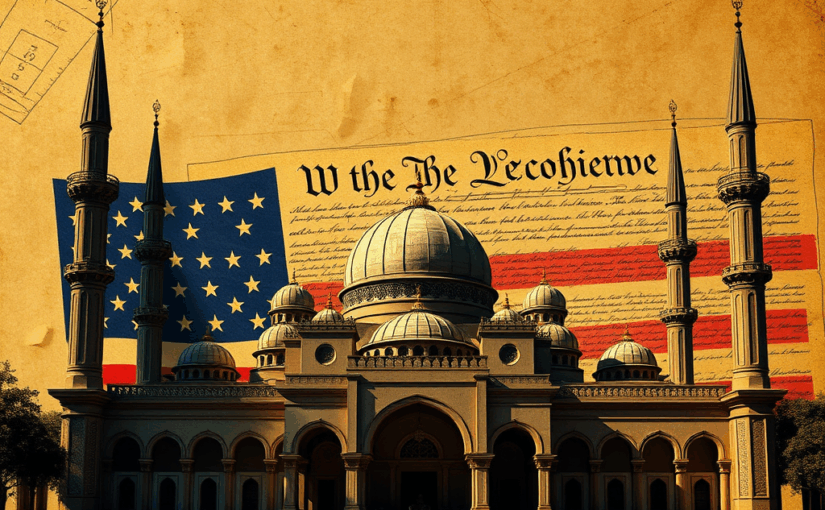
Why Islam Is Incompatible with American Democracy

The United States is built on a secular Constitution that enshrines popular sovereignty, individual liberties, separation of church and state, and equality under man-made law. Orthodox Islamic doctrine, as understood by most classical and contemporary scholars, rejects these foundations in favor of God’s absolute rule through Sharia. Here are the core reasons for this irreconcilable clash:

Divine Sovereignty vs. “We the People”

The U.S. Constitution begins with “We the People” as the ultimate source of political authority. In orthodox Islam, sovereignty (hakimiyya) belongs exclusively to Allah. The Quran declares: “Legislation is not but for Allah” (12:40). Thinkers like Sayyid Qutb and Ayatollah Khomeini called man-made constitutions shirk (polytheism—because they place humans in the role of lawgiver. To an orthodox Muslim, swearing an oath to “support and defend the Constitution” (as required of officials and citizens) risks compromising tawhid if the Constitution ever conflicts with Sharia.

Sharia Supremacy vs. Constitutional Supremacy

Sharia is considered divine, eternal, and superior to any human document. Traditional rulings on apostasy (punishable by death), blasphemy, homosexuality, gender roles, inheritance, and interest banking directly contradict First, Fifth, Eighth, and Fourteenth Amendment protections. Even “moderate” applications often demand Sharia’s precedence: many American Muslim organizations (e.g., CAIR, ISNA) have historically supported the idea that the Quran, not the Constitution, is the highest authority for Muslims. A 2011 survey found significant minorities of U.S. Muslims believing Sharia should override the Constitution in certain matters.

No Separation of Religion and State

American democracy rests on the First Amendment’s Establishment and Free Exercise Clauses—no state religion, no religious test for office. Islam, in its classical form, is a total system (din) where religion and politics are inseparable. The goal of many orthodox movements is to establish Allah’s rule on earth. Implementing full American-style secularism is viewed as kufr (unbelief) by traditional scholars. As one prominent voice put it: “The mosque and state are one.”

Equality vs. Islamic Hierarchy

The Constitution guarantees equal protection and rejects religious discrimination. Traditional Sharia institutes legal inequality: non-Muslims (dhimmi status, jizya tax), women (half inheritance, testimony worth half a man’s), and mandates punishments (hudud) that violate “cruel and unusual” standards. LGBTQ rights, freedom to change religion, and unrestricted free speech (including criticizing Islam) are non-negotiable in America but prohibited under orthodox Sharia.

In short, while reformist or cultural Muslims can thrive under the Constitution by treating faith as private, orthodox Islam—committed to Sharia as Allah’s unchangeable law—views the core principles of American constitutional democracy as heretical. The two systems cannot fully coexist without one yielding to the other.

Screwtape’s Social Media Strategy

My Dearest Wormwood,

I trust this letter finds you in good spirits, or at least, in a suitably malicious state of being. Your last report concerning the Patient was… adequate. Adequate, Wormwood, is hardly the standard we aim for in the Lowerarchy. Still, I detect a burgeoning aptitude for subtle corruption within you, and that, at least, is something.

You asked, rather clumsily, about this new human invention: the “social media.” A delightful development, Wormwood, a truly exquisite tool in our eternal struggle. When first the Enemy inspired His creatures with the desire for community, He likely envisioned something rather… different. But we, my dear nephew, have long specialized in the perversion of good.

Here, then, is how you are to wield this weapon:

Firstly, encourage a constant stream of comparison. The Patient, being human, is already susceptible to the sin of envy. Social media amplifies this beautifully. Let him see the meticulously curated lives of others – their sun-drenched holidays, their perfectly presented meals, their impossibly cheerful children. He must never suspect the artifice, the careful cropping, the dozens of failed attempts that lie behind each triumphant post. His own humble existence will, by comparison, seem dull, inadequate, and utterly lacking. This breeds dissatisfaction, a fertile ground for resentment against the Enemy’s supposed neglect.

Secondly, foster a spirit of performative virtue. The humans, in their pathetic attempts at goodness, often seek approval. On these platforms, however, the approval becomes the end, not the means. Let the Patient post grand pronouncements of his moral rectitude, his charitable donations, his profound insights. He must feel a rush of self-congratulation with each ‘like’ or ‘share.’ The danger, Wormwood, is that he might actually do good in the quiet, unseen places. Social media encourages him to perform it loudly, for an audience. This saps the true humility from his actions, turning genuine compassion into mere exhibition.

Thirdly, cultivate an addiction to the trivial. The Enemy, in His tiresome way, wishes for His creatures to contemplate eternity, to ponder deep truths, to engage in meaningful relationships. We, on the other hand, thrive on distraction. The “feed,” as they call it, is a veritable river of superficiality. Let the Patient scroll endlessly, consuming bite-sized morsels of information, amusing memes, and outrage-inducing headlines. He must never settle on one thing long enough to truly consider it. His attention span must become as fleeting as a butterfly’s wing. This constant mental chatter leaves no room for quiet reflection, for prayer, or for truly listening to the Enemy’s whisper.

Fourthly, incite righteous indignation. This is a particularly potent brew. When the Patient encounters opinions contrary to his own, or even slightly misaligned, encourage him to respond with immediate, unthinking fury. The anonymity of the screen is a wonderful shield for venom. Let him join the digital mobs, hurl insults, and feel the intoxicating surge of moral superiority. This breeds division, destroys charity, and, most importantly, directs his anger at his fellow humans rather than where it truly belongs – at us!

Finally, and perhaps most subtly, ensure a pervasive sense of isolation. While these platforms ostensibly connect humans, they often foster a deeper loneliness. The Patient will have hundreds, even thousands, of “friends,” but few, if any, genuine confidantes. Encourage him to rely on these digital interactions for all his social needs, neglecting face-to-face encounters, the messy, inconvenient reality of true relationship. He will feel seen, but never truly known. He will receive affirmation, but never true understanding. This void, my dear Wormwood, is a fertile ground for despair, which is, as you know, one of our most cherished crops.

Remember, Wormwood, our objective is not simply to make the Patient ‘bad,’ but to make him ineffective, distracted, and ultimately, lukewarm. This “social media” is a tool perfectly suited to this end. Employ it with diligence, and you shall earn yourself a hearty feast of grubs.

Your affectionate Uncle,
Screwtape

Resurrection Facts

I know the resurrection is a fact, and Watergate proved it to me. How? Because 12 men testified they had seen Jesus raised from the dead, then they proclaimed that truth for 40 years, never once denying it. Every one was beaten, tortured, stoned and put in prison. They would not have endured that if it weren’t true. Watergate embroiled 12 of the most powerful men in the world–and they couldn’t keep a lie for three weeks. You’re telling me 12 apostles could keep a lie for 40 years? Absolutely impossible.

Chuck Colson

I praise you because I am fearfully and wonderfully made ~Psalm 139:14

Modern Heresy

Adults in the US—including evangelicals—are moving away from orthodox understandings of God and his Word year after year.

We took a look at this year’s State of Theology survey… 1/5

More than half—56 percent—of evangelical respondents affirmed that “God accepts the worship of all religions, including Christianity, Judaism and Islam.” 2/5

And 62 percent of evangelical respondents said that everyone is born innocent in the eyes of God. 3/5

But while evangelicals were found to be moving away from orthodox beliefs about God, they’ve grown more assured in their stances on cultural & ethical issues.

For example: 91 percent believe abortion is a sin, the highest level since the survey began. 4/5

Learn more about the “State of Theology” survey results here. 5/5

Originally tweeted by Christianity Today (@CTmagazine) on September 19, 2022.

Overcome

"In this world you will have trouble. But take heart! I have overcome the world." ~John 16:33

Fully Immersed

Do you dunk em once, twice or do you have to dunk em three times?

Local Baptist Careful To Fully Immerse Chick-Fil-A Nuggets In Honey Mustard Sauce

from TrommTimes via IFTTT