Have you ever wondered how the news about the Declaration of Independence signing was sent to all 13 colonies?
We tend to imagine the birth of America as a single, clean moment: the quill scratches the parchment, the bell rings, and suddenly everyone knows they are part of a new nation. But on July 5, 1776, the reality was a massive logistical nightmare. The ink was barely dry on the Dunlap Broadsides—the first official printed copies of the text—when the Continental Congress faced a critical problem. Ideas are useless if you can’t distribute them, and British warships completely controlled the coastal waterways. To launch this new nation, they had to execute America’s first massive, continental data deployment through a pitch-black wilderness.
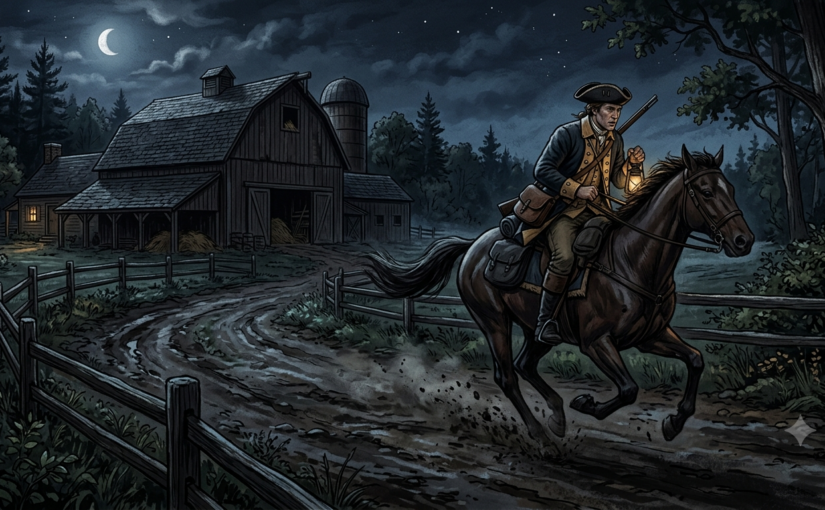
To move this treasonous payload, Benjamin Franklin utilized a decentralized human network: the Express Riders. This wasn’t a leisurely mail delivery; it was a high-speed, high-stakes relay protocol. Riders were handed the documents and pushed into the night, navigating muddy colonial tracks by the flickering light of handheld candles. To maintain maximum speed, they relied on a strict node-to-node system, swapping out exhausted horses at hidden taverns and farmhouses every 15 to 20 miles. The physical toll was brutal, and the threat of interception by British loyalists was constant. Because of this, riders used a manual “handshake protocol”—carrying specific tokens or authenticated signatures to prove to local committees of safety that the document was legitimate and not a British trap.
As a software engineer, it’s impossible not to see the structural parallels between this 18th-century network and modern packet routing. In computing, we break data into packets and route them across a decentralized mesh of servers. If one router goes offline, the network automatically self-heals, finding a parallel path to deliver the payload. Franklin designed the colonial post roads with this exact fault tolerance in mind. If an express rider on the primary coastal highway ran into a British patrol, the network didn’t crash. The payload was automatically rerouted down parallel, inland backcountry trails. The network latency was high—measured in weeks rather than milliseconds—but the architecture was fundamentally resilient.
For those of us living in the Carolina Upcountry, the latency was particularly real. It took nearly three weeks for the midnight packet protocol to route the data down to the Carolinas successfully. When a weary rider finally crossed the trading paths near Charlotte and the settlements around what is now Rock Hill, the document was delivered to local magistrates. Because many backcountry farmers were illiterate, the text was read aloud at dusty crossroads and church steps. Hearing those words transformed local, isolated skirmishes against British overreach into a unified, national struggle.
